The stillness of the Dore valley today offers little hint of the violent 16th-century upheaval that once defined this terrain. In 1575, the Huguenot captain Matthieu Merle descended upon the village, leaving a trail of devastation as over one hundred homes were reduced to ash. The “Pré de Combat” along the riverbanks remains a silent witness to the subsequent bloody clash where the Count of Montmorin Saint-Herem finally halted the Protestant advance. Amidst this historical weight, the 15th-century parish church stands as a stoic survivor, its granite walls and noble lines bearing the gravity of centuries of reconstruction and local devotion.
An afternoon wandering through the village reveals the Chapelle des Pénitents Blancs, a structure of austere beauty that once served the Confrérie Confalonis. Now reimagined as a museum, the chapel preserves the somber liturgical artifacts and traditions of the Livradois penitents, offering a tactile connection to the region’s spiritual past. Nearby, the skeletal remains of the Château de Riols provide a stark architectural counterpoint to the more contemporary “espace rural,” a project by architect Boris Bouchet that received the Prix de l’Équerre d’argent for its modern interpretation of rural design. This dialogue between medieval ruins and award-winning contemporary stone reflects a community that respects the continuity of its landscape.
The geographical identity of the commune is inextricably linked to the flow of the Dore, which historically fueled a sophisticated paper-milling industry from the Renaissance through the 19th century. The Moulin de la Grand’Rive persists as a poignant relic of this industrial heritage, a testament to an era when water and rags were transformed into the fine parchment of the Auvergne. As the elevation climbs toward the 1,041-meter summits, the dense forest canopy of the Livradois-Forez takes hold, occasionally pierced by the heritage train that traverses the valley during the summer months. This ascent provides a slow-motion perspective on the dramatic transition from the fertile riverbanks to the rugged, high-altitude timberlands.
Markets of Livradois-Forez
Market day
Time your visit to enjoy the local market.
Sunday
Market in Marsac-en-Livradois
Every week
Local profile
At a Glance
- Population
- 1,381
- Demonym
- Marsacois
- Altitude
- 531–1041 m
- Forest
- 47.6%
residents
local residents
lowest to highest
commune coverage
Did You Know?
“Local residents were historically known as "Ventres jaunes" (Yellow bellies), a moniker likely derived from the marshy, yellow-tinted terrain of the Dore valley.”
Cultural Heritage
Protected historic monuments in Marsac-en-Livradois
Eglise ou chapelle des Pénitents
Marsac-en-Livradois
Moulin à papier de la Grand'Rive
Marsac-en-Livradois
Croix de chemin dite Croix des Issards
Hameau des Issards
Eglise Notre-Dame
Marsac-en-Livradois
Croix de chemin du 16e siècle en pierre
place de la Halle
Recent Wildlife & Flora Log
Nature observations recorded within 5km of Marsac-en-Livradois.
Orthotrichum Hedw.
Agrypnus murinus (Linnaeus, 1758)
Cryptocephalus sericeus (Linnaeus, 1758)
Cidnopus pilosus (Leske, 1785)
Bee Orchid
Asio otus (Linnaeus, 1758)
Brain Fungus
Funeral Bell
Jelly Tongue
Yellow Stagshorn
Trails around Marsac-en-Livradois
Discover physical challenges and natural beauty in the immediate vicinity.
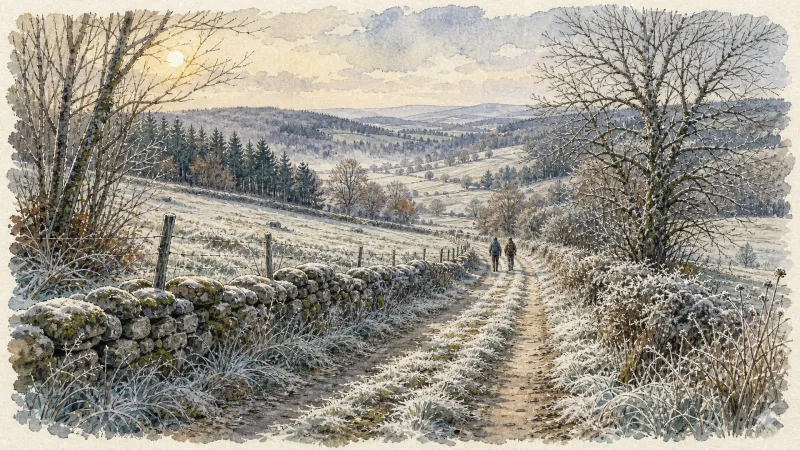
Forez circuit - Discover local skills and crafts (loop no. 6)
This circuit invites you to discover the skills and crafts of the Livradois through the themes of water and nature.
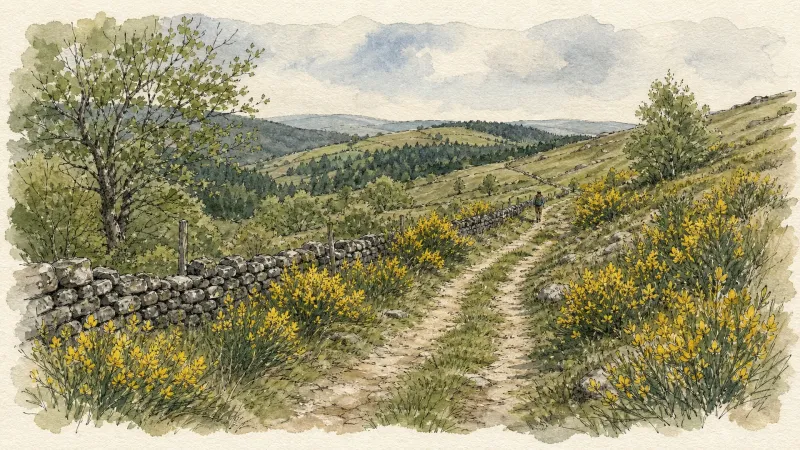
Circuit n°25 Les Bords de Dore
Discover this trail through the heart of Livradois-Forez.
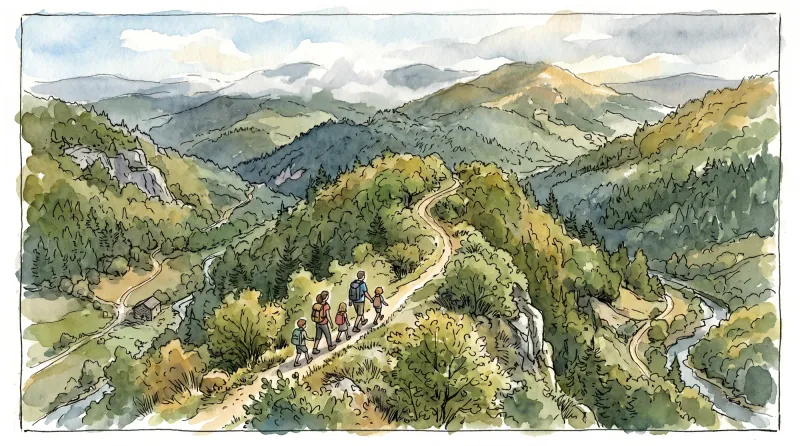
Circuit n°26 Les villages de Marsac
Discover this trail through the heart of Livradois-Forez.
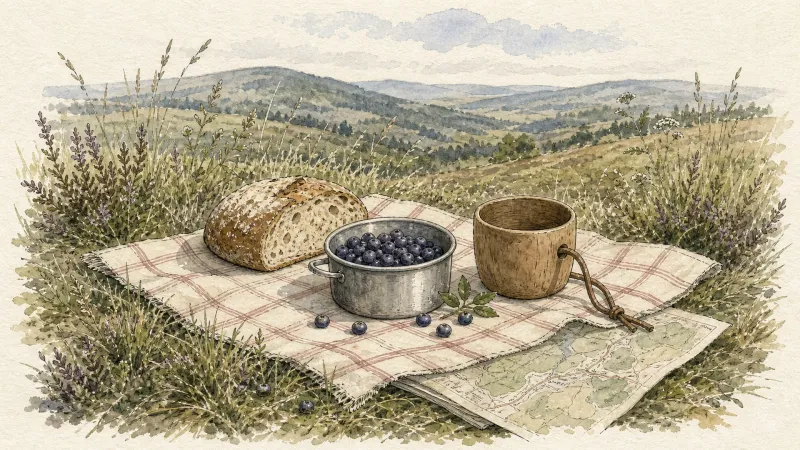
Circuit n°27 Les balcons
Discover this trail through the heart of Livradois-Forez.
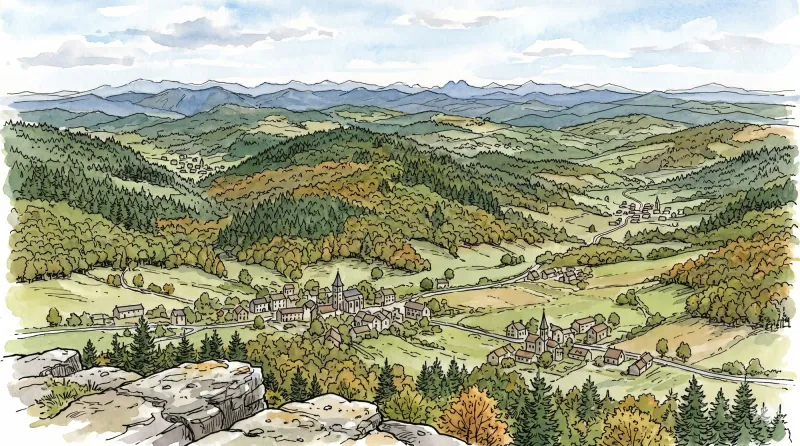
Circuit n°35 Balade en Livradois
Discover this trail through the heart of Livradois-Forez.
Circuit n°36 Le Tour d’Arlanc
Discover this trail through the heart of Livradois-Forez.
Explore Nearby
Complement your visit to Marsac-en-Livradois by exploring these neighboring villages.
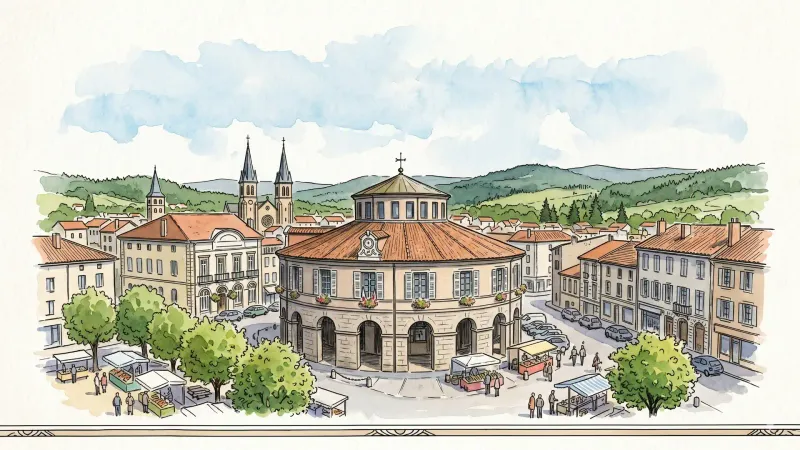
Ambert
A center of medieval commerce and legendary papermaking, where circular architecture meets the rigorous traditions of the Livradois-Forez mountains.
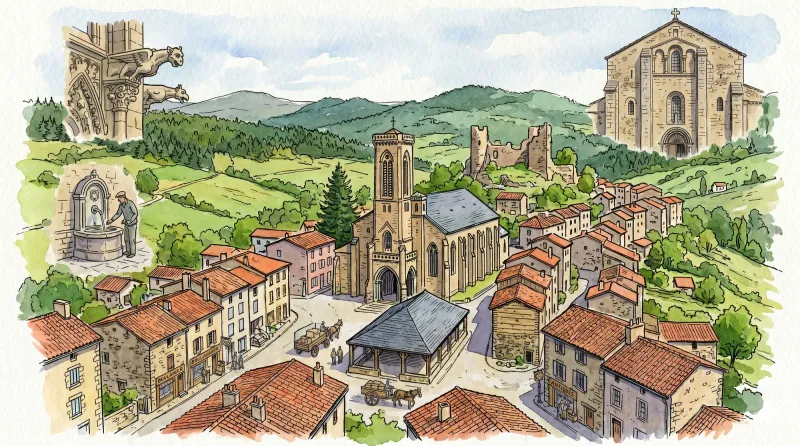
Arlanc
A center of rare optical curiosities and botanical cartography set within a profound geological rift.
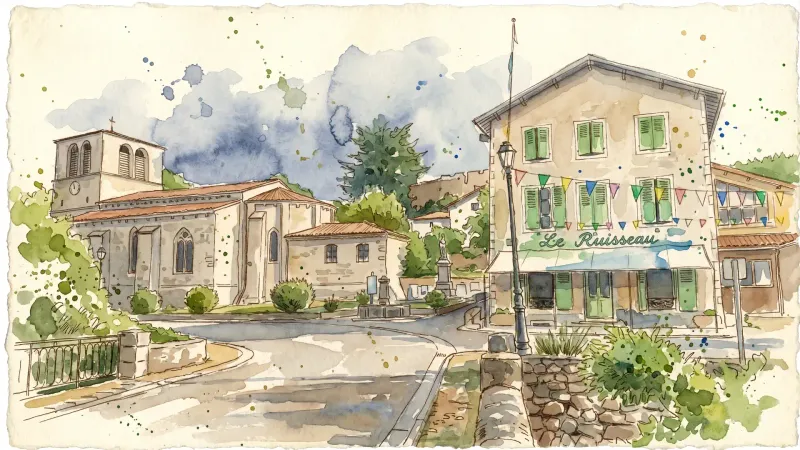
Beurières
A vertical journey from the beaver-named banks of the Dore to the high Forez forests, centered around a 12th-century Romanesque church and a rare 19th-century industrial starch factory.
Chambon-sur-Dolore
A high-altitude forest sanctuary where Romanesque granite architecture meets the unexpected botanical legacy of the clementine's creator.
Champétières
A high-altitude sanctuary of ancient stone and dense timber, where 15th-century architecture meets the rugged silence of the Livradois-Forez.
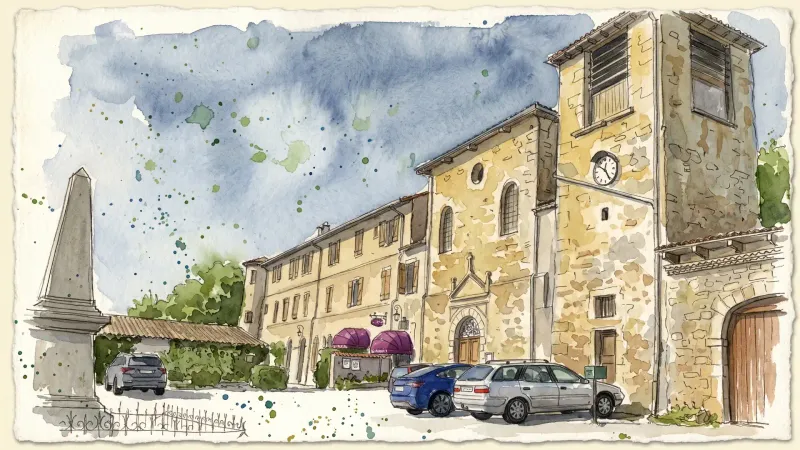
Chaumont-le-Bourg
An exploration of medieval stonework and Benedictine echoes on the "bald mount" of the Forez highlands.
Saint-Bonnet-le-Chastel
A high-altitude sanctuary of Flamboyant Gothic architecture and ancient communal traditions, set against the granite ridges of the eastern Livradois.
Saint-Ferréol-des-Côtes
A high-altitude journey through dense fir forests and granite hamlets that once inspired the dramatic Occitan poetry of the 19th-century Auvergne.
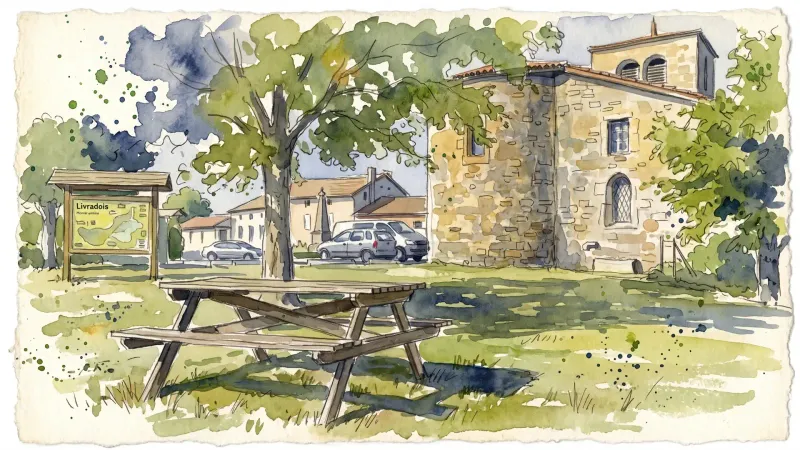
Saint-Just
A high-altitude sanctuary of dense pine forests and ancient granite hamlets, perfect for a contemplative afternoon immersion into the rugged soul of the Forez mountains.
Saint-Martin-des-Olmes
A high-altitude sanctuary where the scent of resin meets the preserved inkwells of the Third Republic, ideally suited for a contemplative afternoon detour.