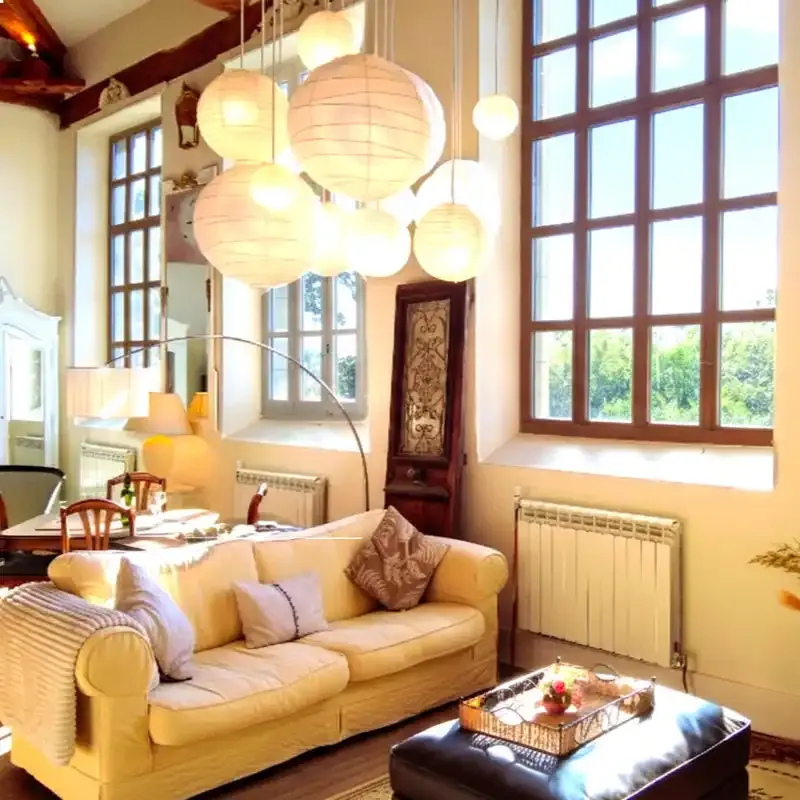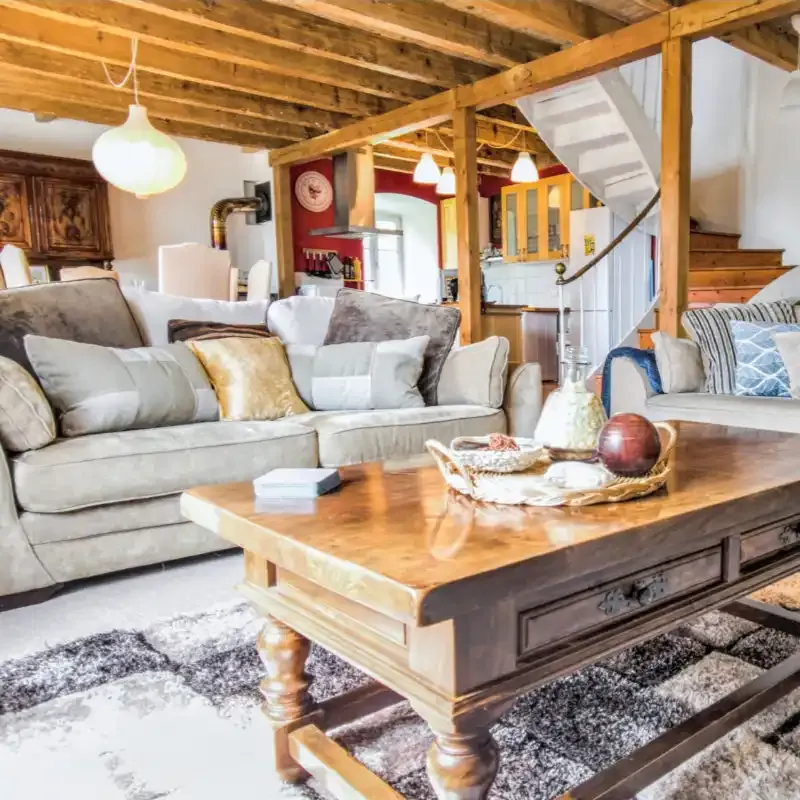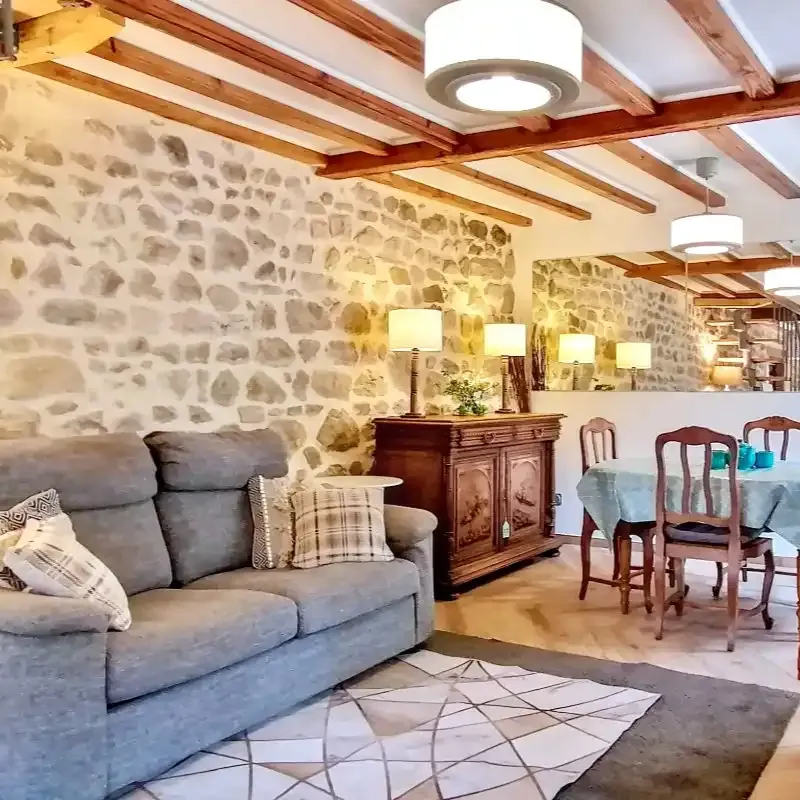
The landscape of Chaumont-le-Bourg is defined by its etymological roots—the mons calvus or “bald mount”—where the elevation climbs from the lush Dore valley to heights of 860 meters. This transition offers a distinct atmospheric shift, where the dense canopy of the Livradois-Forez gives way to clearing vistas and the stark, noble lines of granite architecture. Wandering through the dispersed hamlets, one observes a quiet, deliberate rhythm governed by the mountain’s edge, where the scent of coniferous resin mingles with the cool, damp air characteristic of the northern Massif Central.
In the satellite hamlet of Masselèbre, the hand of the medieval stonemason remains visible in the enduring grain of the local rock. A fourteenth-century stone bridge arches with silent gravity over an ancient course of the Dore, its masonry weathered by centuries of seasonal shifts. Nearby, a celebrated wayside cross stands as a masterwork of late Gothic sculpture, carved during the sunset of the Middle Ages. Its dual faces—a solemn Christ and a delicate Coronation of the Virgin flanked by celestial figures—retain a profound tactile quality, inviting a close study of the intricate chisel marks that have withstood the alpine frosts since the 1400s.
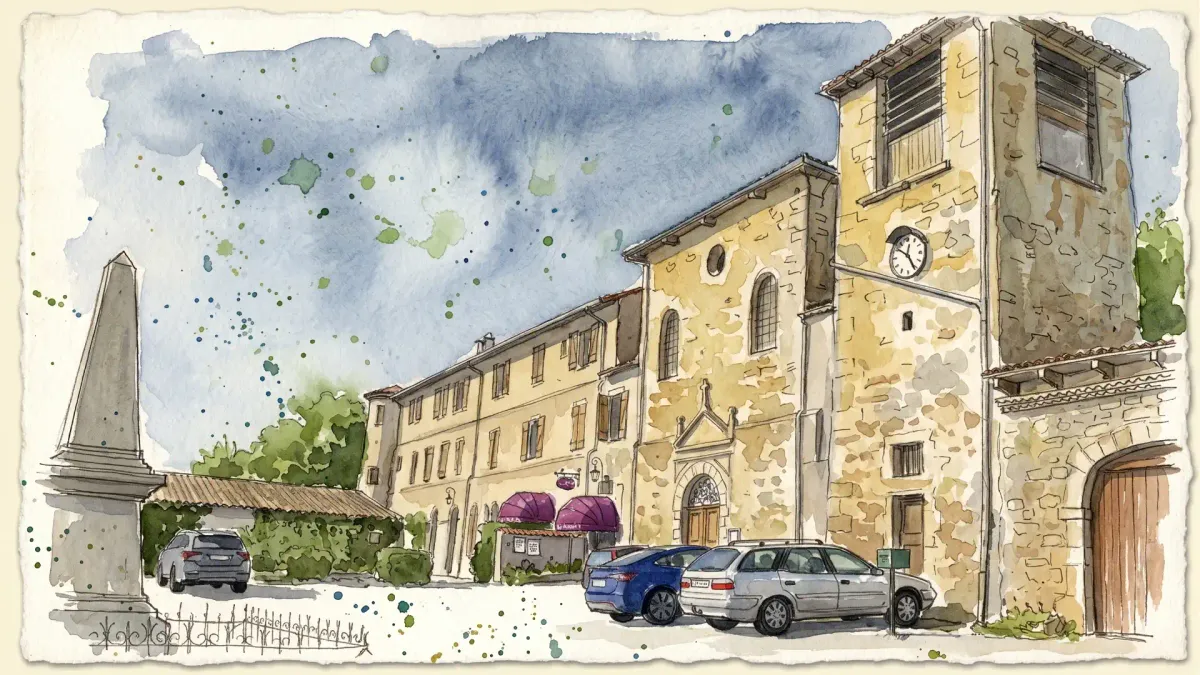
The heart of the village preserves the structural echoes of a Benedictine priory, a site of spiritual labor that has been razed and resurrected through the sixteenth and eighteenth centuries. Within the local church, the sculptural narrative continues with a sixteenth-century effigy of a seated Saint Peter, a figure whose poised intensity reflects the deep-seated religious devotion of the Auvergne highlands. Outside, the 1892 fountain provides a later, more civic flourish to the village square, its flowing waters serving as a temporal bridge between the monastic silence of the past and the enduring, rural tranquility of the present day.
Local profile
At a Glance
- Population
- 238
- Demonym
- —
- Altitude
- 550–860 m
- Forest
- 50.7%
residents
local residents
lowest to highest
commune coverage
Did You Know?
“The name Chaumont is a French evolution of the Latin "mons calvus," meaning "bald mount," likely referring to a summit stripped of its forest in antiquity.”
Cultural Heritage
Protected historic monuments in Chaumont-le-Bourg
Croix de chemin en pierre du hameau de Masselèbre
La Croix
Recent Wildlife & Flora Log
Nature observations recorded within 5km of Chaumont-le-Bourg.
Agrypnus murinus (Linnaeus, 1758)
Cryptocephalus sericeus (Linnaeus, 1758)
Cidnopus pilosus (Leske, 1785)
Protaetia cuprea (Fabricius, 1775)
Asio otus (Linnaeus, 1758)
Bog-bean
Large Emerald
Rhombic Leatherbug
Brain Fungus
Funeral Bell
Trails around Chaumont-le-Bourg
Discover physical challenges and natural beauty in the immediate vicinity.
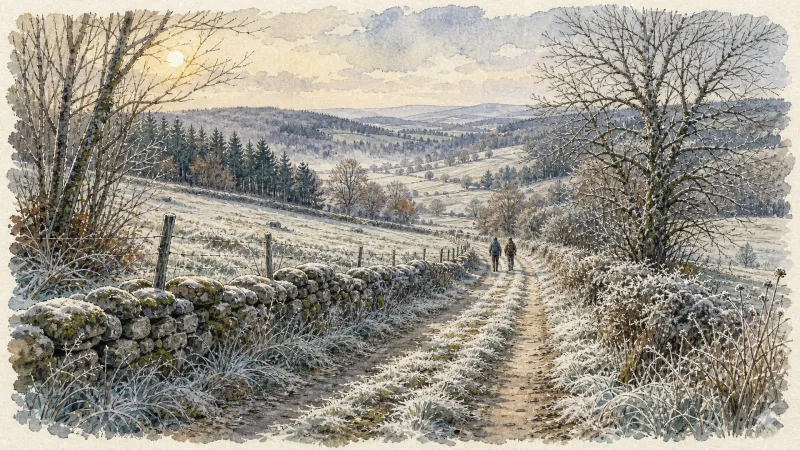
Forez circuit - Discover local skills and crafts (loop no. 6)
This circuit invites you to discover the skills and crafts of the Livradois through the themes of water and nature.
Circuit n°36 Le Tour d’Arlanc
Discover this trail through the heart of Livradois-Forez.
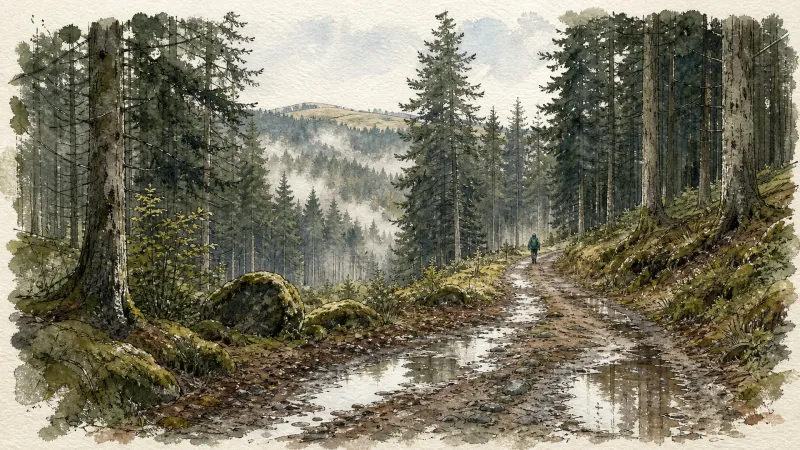
Masselèbre
This easy family walk leads from the Chaumont-le-Bourg priory to the lovely little village of Masselèbre, known for its bridge beneath which no river now flows.
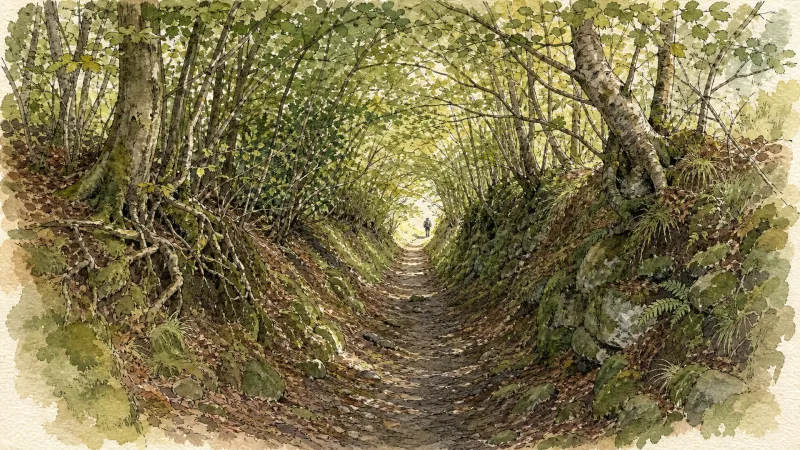
Tour du Haut-Livradois et Abbayes (circuit route n°20)
Discover this trail through the heart of Livradois-Forez.
Explore Nearby
Complement your visit to Chaumont-le-Bourg by exploring these neighboring villages.
Arlanc
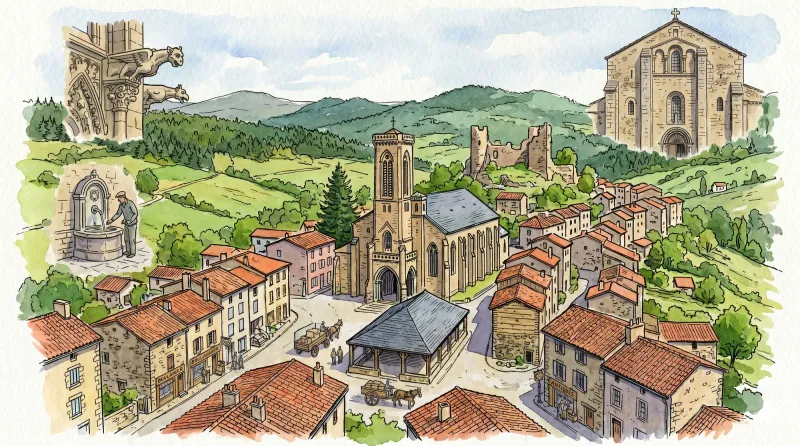
A center of rare optical curiosities and botanical cartography set within a profound geological rift.
Marsac-en-Livradois
A landscape of resilient Gothic architecture and paper-milling history, defined by the strategic waters of the Dore and the scars of 16th-century religious conflict.
Saint-Just
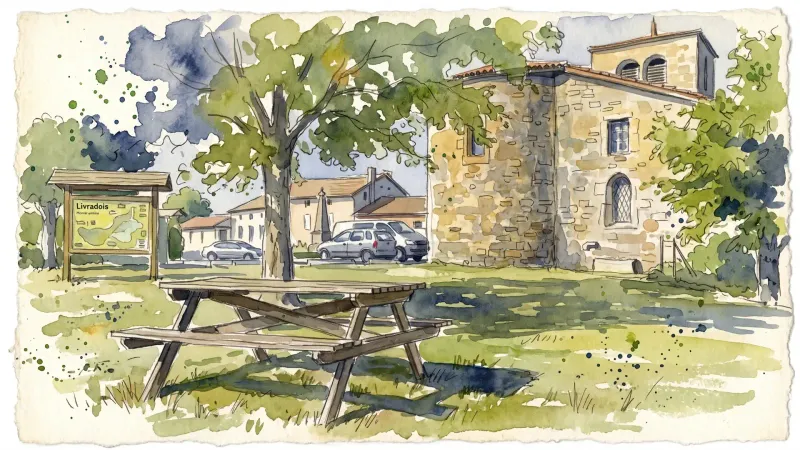
A high-altitude sanctuary of dense pine forests and ancient granite hamlets, perfect for a contemplative afternoon immersion into the rugged soul of the Forez mountains.