Illustration in progress
Ascending toward the dorsal spine of the Livradois, the landscape shifts into a somber, majestic density where the forest claims over sixty percent of the terrain. Chambon-sur-Dolore, whose etymology evokes an ancient measure of fertile earth, occupies an elevation that commands a crisp, mountain atmosphere even in the height of the July heat. The commune exists as a constellation of isolated hamlets—Malvieille, Malpertuis, and La Croisette—scattered across a rugged plateau where the Dolore river carves its quiet, persistent path. Visitors will encounter a singular silence here, broken only by the wind through the pines and the rhythmic tolling of the village bell, a testament to a community defined by its relationship with these high-altitude requirements.
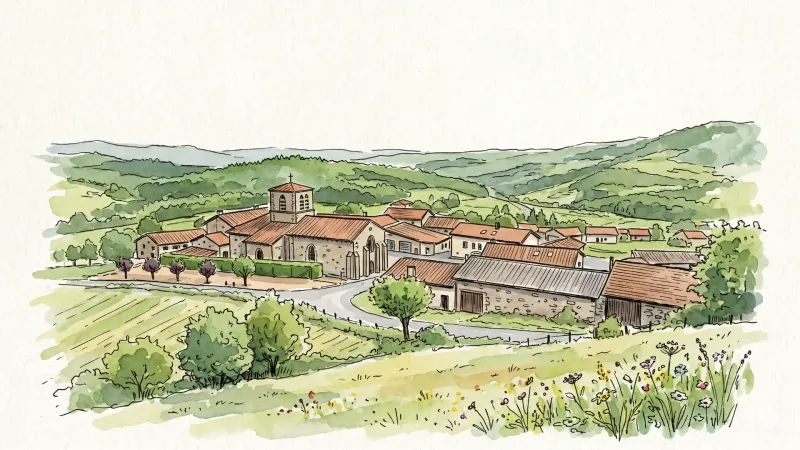
The architectural soul of the village resides in its Romanesque parish church, a structure of stoic granite that embodies the austere beauty of the Auvergne highlands. Its lines are clean and unadorned, reflecting a medieval sensitivity to the surrounding elements and the durability required for winters at twelve hundred meters. Nearby, at the crossroads known as La Croisette, a cast-iron calvary stands upon a weathered granite stèle, restored to its former dignity in recent years. This monument serves as a silent sentinel for those traversing the ancient routes between Ambert and the southern plateaus, offering a moment to contemplate the precision of nineteenth-century ironwork against the backdrop of an indifferent, sprawling wilderness.
Beyond its physical monuments, the commune harbors a legacy that reached from these remote woods to the sun-drenched orchards of North Africa. In the hamlet of Malvieille, Vital Rodier was born in 1839; known later to the world as Frère Clément, he would eventually crossbreed the mandarin orange and the Mediterranean sour orange, resulting in the fruit that bears his name today. This unexpected botanical heritage lends a layer of historical intrigue to an afternoon wandering through the local lanes. To walk the paths of Chambon is to tread the same ground that shaped the mind of a man who transformed global horticulture, all while under the watchful, silent gaze of the high Forez peaks.
Local profile
At a Glance
- Population
- 141
- Demonym
- Chambonnaires
- Altitude
- 887–1208 m
- Forest
- 63%
residents
local residents
lowest to highest
commune coverage
Did You Know?
“Vital Rodier, the Marist brother known as Frère Clément who developed the clementine in Algeria, was born in the hamlet of Malvieille within this commune.”
Cultural Heritage
A quiet village with authentic Auvergne charm.
Recent Wildlife & Flora Log
Nature observations recorded within 5km of Chambon-sur-Dolore.
Beech
Alder
Common Bistort
Meadow Campion
Common Gypsyweed
Jewelled Amanita
Aspen
Common Water Forget-Me-Not
Linaria repens (L.) Mill.
European False Blusher
Trails around Chambon-sur-Dolore
Discover physical challenges and natural beauty in the immediate vicinity.
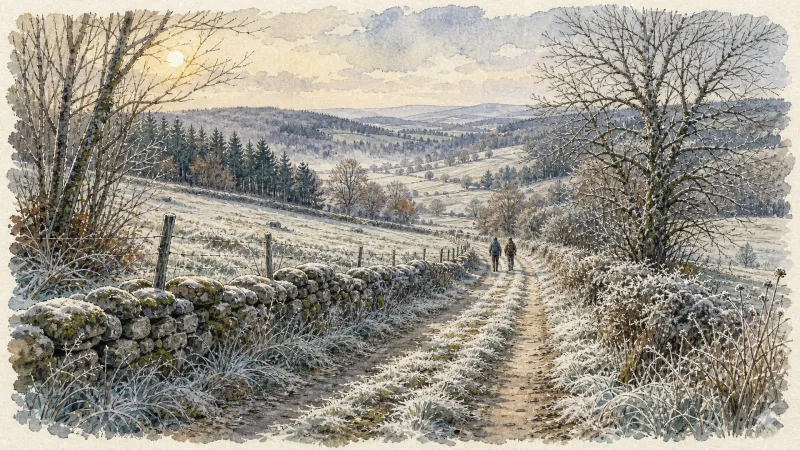
Forez circuit - Discover local skills and crafts (loop no. 6)
This circuit invites you to discover the skills and crafts of the Livradois through the themes of water and nature.
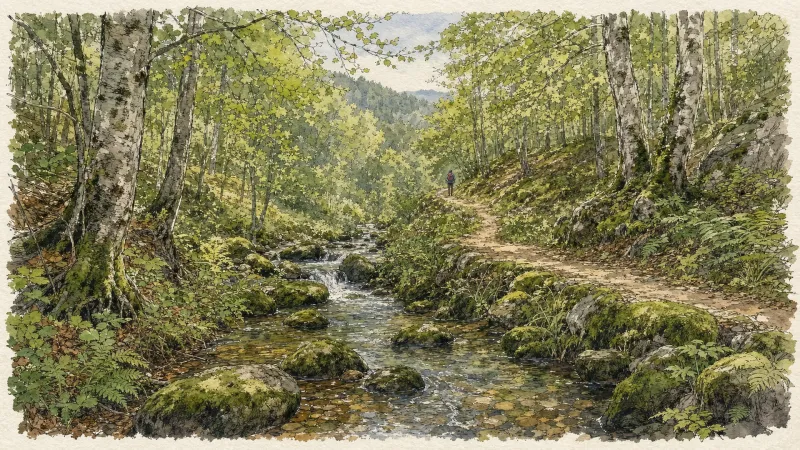
Circuit n°44 Les Cimes du Livradois
Secteur St-Amant-Roche-Savine
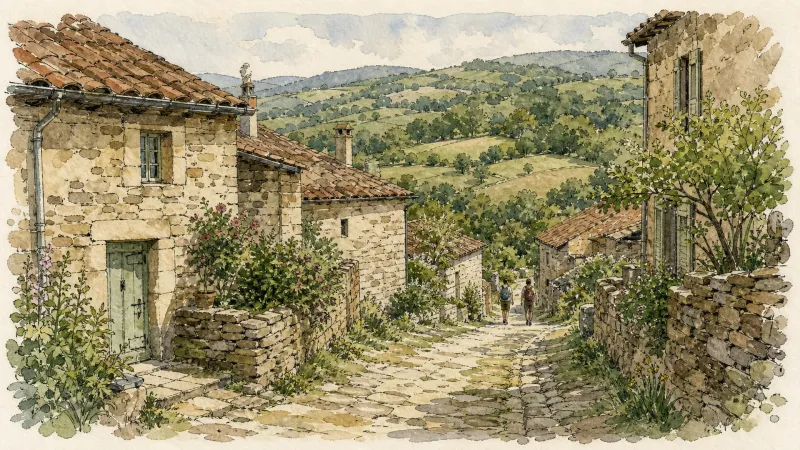
From Gargantua’s Footstep to the Three Drops of Blood
Bracing himself in the La Palle stream, Gargantua carved a rock known as the “Pas de Gargantua”. People, meanwhile, left a substantial built heritage: a church, calvary, carved doorway, wrought-iron or granite crosses, bread oven, fountains and washhouse.
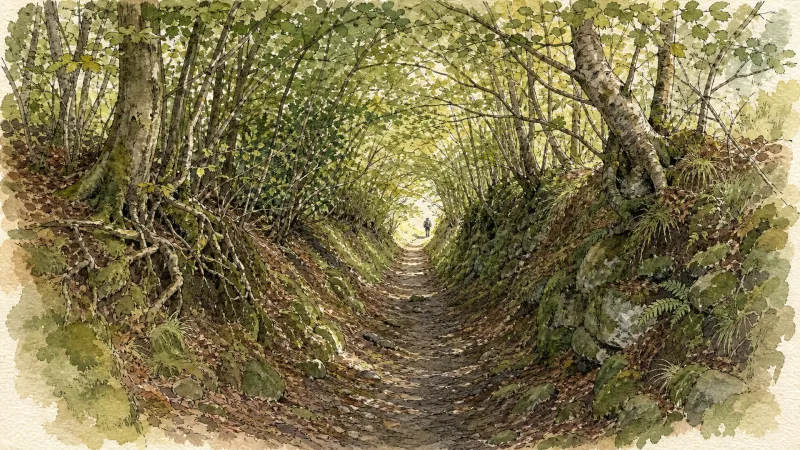
Virée en Haut-Livradois (circuit route n°5)
Discover this trail through the heart of Livradois-Forez.
Explore Nearby
Complement your visit to Chambon-sur-Dolore by exploring these neighboring villages.
Champétières
A high-altitude sanctuary of ancient stone and dense timber, where 15th-century architecture meets the rugged silence of the Livradois-Forez.
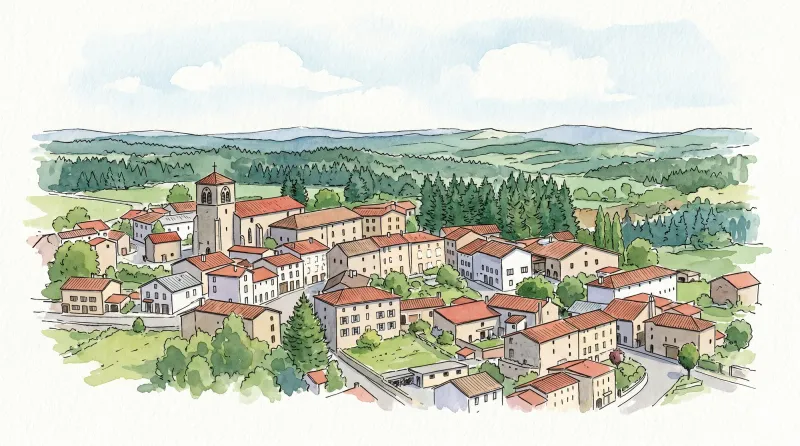
Fournols
A high-altitude sanctuary defined by dense conifer forests, ancient Romanesque granite, and the storied traditions of blue-veined mountain cheese.
Le Monestier
A high-altitude sanctuary of granite and timber, where the literary ghosts of Henri Pourrat wander through mist-laden forests and 15th-century stone.
Marsac-en-Livradois
A landscape of resilient Gothic architecture and paper-milling history, defined by the strategic waters of the Dore and the scars of 16th-century religious conflict.
Saint-Bonnet-le-Bourg
A high-altitude sanctuary where the Dore river begins its journey amidst ancient Romanesque stonework and deep monastic forests.
Saint-Bonnet-le-Chastel
A high-altitude sanctuary of Flamboyant Gothic architecture and ancient communal traditions, set against the granite ridges of the eastern Livradois.
Saint-Germain-l'Herm
A high-altitude ridge settlement characterized by ancient megalithic sites, a fortified Romanesque priory, and a storied history of timber craftsmanship for the Royal Navy.