Illustration in progress
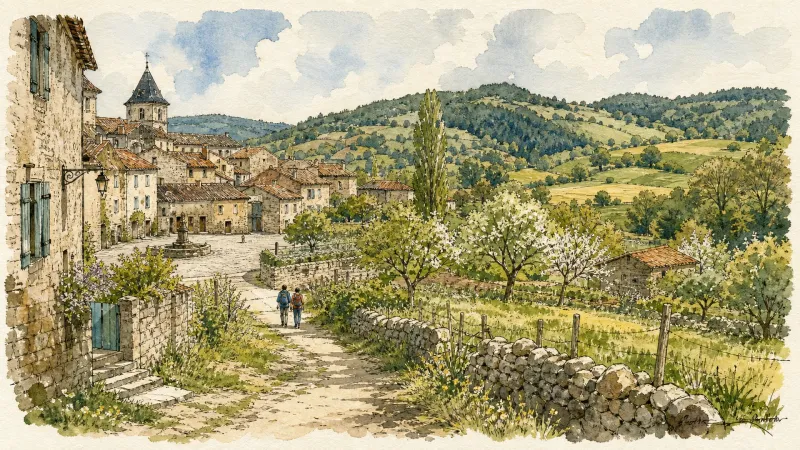
At an elevation where the air thins and the silence of the Livradois highlands becomes palpable, Saint-Bonnet-le-Bourg presides over a landscape dominated by dense coniferous stands and sprawling moorland. To the north of the village, the Dore river emerges from the earth, beginning its long descent toward the Allier. This is a territory defined by the granite of the Massif Central, where seventy-four percent of the commune is shrouded in a thick canopy of timber. Travelers arriving for an afternoon will encounter a settlement that feels carved directly from the mountainous terrain, its rhythm dictated by the harsh winters and the cool, brief summers characteristic of this high-altitude climate.
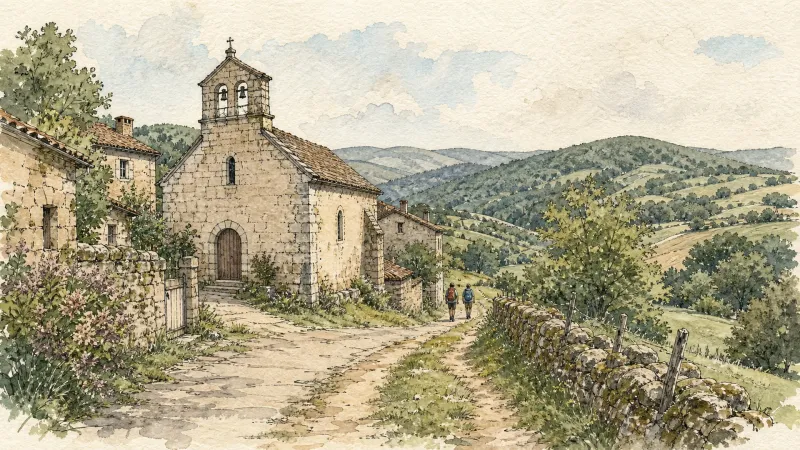
The architectural heart of the village is the Church of Saint-Blaise, an 11th-century priory that once belonged to the influential abbey of La Chaise-Dieu. While the exterior underwent modifications in the 1800s, the south portal remains an uncompromising specimen of Romanesque craftsmanship, featuring two tiers of austere stone arches. Stepping inside reveals a three-bay nave vaulted in broken barrel style, leading toward an apse where the stone comes alive with medieval symbology. Here, one finds capitals intricately sculpted with lions, double-bodied monsters, and two-headed eagles—motifs characteristic of the region’s spiritual and artistic heritage. A 16th-century stone cross stands sentinel on the adjacent grounds, further anchoring the site in its deep temporal roots.
Beyond the central cluster of dwellings, the commune dissolves into a network of over thirty hamlets, such as La Faye and Feneyrolles, scattered across the high plateau. To the far west lies the Étang de Marchaud, a body of water that serves as a living record of monastic industry. These waters were originally engineered by the monks of La Chaise-Dieu, who transformed the marshy heights into productive fisheries. A walk along its perimeter offers a glimpse into the methodical persistence of those medieval laborers. The proximity of this site to the legacy of local volcanologist Guy Camus reminds the visitor that this land was forged by both the violent tectonic history of the Puys and the patient hands of Benedictine settlers.
Local profile
At a Glance
- Population
- 186
- Demonym
- —
- Altitude
- 836–1145 m
- Forest
- 74.1%
residents
local residents
lowest to highest
commune coverage
Did You Know?
“The Étang de Marchaud was hand-excavated by the monks of La Chaise-Dieu, a testament to medieval hydraulic engineering in the heart of the forest.”
Cultural Heritage
A quiet village with authentic Auvergne charm.
Recent Wildlife & Flora Log
Nature observations recorded within 5km of Saint-Bonnet-le-Bourg.
Beech
Alder
Angelica sylvestris L.
Powdered Quaker
Engrailed
Early Tooth-Striped
Red Chestnut
Early Grey
Brindled Beauty
March Moth
Trails around Saint-Bonnet-le-Bourg
Discover physical challenges and natural beauty in the immediate vicinity.
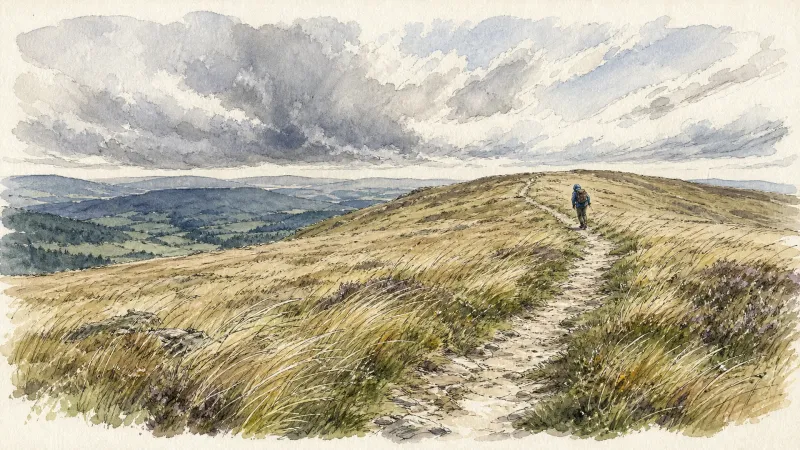
Dore Loop
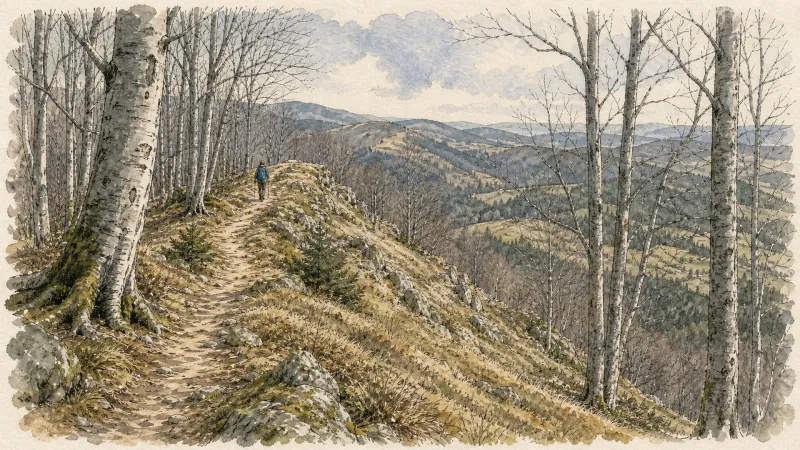
The Livradois-Forez Regional Natural Park, a land of grassland and woodland, promises a memorable journey between valleys and ridges.
Circuit n°40 Bellevue et le bois de la Vierge
Secteur Saint-Germain-l'Herm
Circuit n°41 Etang de Marchaud
Secteur Saint-Germain-l'Herm
Great Livradois-Forez Mountain-Bike Traverse
In the heart of Auvergne, the Great Livradois-Forez Traverse takes you around the Livradois-Forez Regional Natural Park, between two mountain ranges rising from 400 m to 1,600 m.
Pont du Roux
After Saint-Bonnet-le-Chastel and its Gothic church, the trail alternates between woodland and pasture. The winding Dolore once powered many mills and continues to carve out gorges. There are numerous views over the Dolore valley.
The Marchaud pond
This route evolves in a characteristic landscape of the upper Livradois, with coniferous woods, ponds and rivulets, beautiful peasant architecture.
Explore Nearby
Complement your visit to Saint-Bonnet-le-Bourg by exploring these neighboring villages.
Doranges
A high-altitude sanctuary of dense forests and Romanesque stone, where ancient hydraulic mills and revolutionary history converge on the roof of the Livradois.
Fayet-Ronaye
A dual-parish destination carved by the Doulon valley, offering a somber meditation on Druidic legends and fortified Romanesque sanctity.
Novacelles
A deep-valley sanctuary where 14th-century frescoes and the haunting ruins of a ghost village reveal the ancient spiritual core of the Livradois.
Saint-Bonnet-le-Chastel
A high-altitude sanctuary of Flamboyant Gothic architecture and ancient communal traditions, set against the granite ridges of the eastern Livradois.
Saint-Germain-l'Herm
A high-altitude ridge settlement characterized by ancient megalithic sites, a fortified Romanesque priory, and a storied history of timber craftsmanship for the Royal Navy.