Beurières derives its name from the ancient legacy of the beavers that once claimed the banks of the Dore, a reminder of the wilder, aquatic history of this valley. Today, the landscape is defined by a steep verticality, ascending from the riverbed at 557 meters to the silent, dense canopy of the Forez at over a thousand meters. This transition from the fertile lower plains to the austere, timber-dominated heights creates a sensory shift; the air cools and the light narrows as the deciduous trees give way to the dark, permanent green of the mountain woods. The rhythm of the land follows the Boutrand and Firminge streams, which carve through the granite before feeding into the Dore at the commune’s western edge.
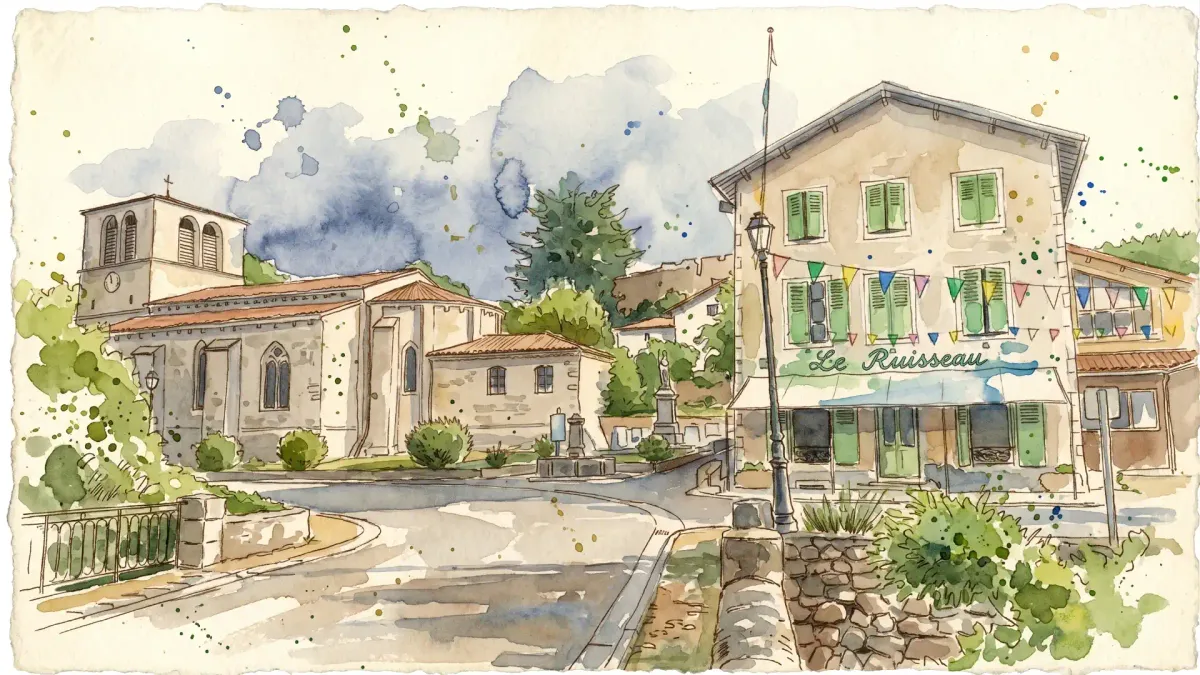
In the village center, the Church of Sainte-Marguerite stands as a stoic witness to the 12th century, its Romanesque origins still visible despite the reconstructions of the 15th and 19th centuries. Inside, a fragment of high medieval artistry remains in the form of a stone baptismal font from the 1100s, its robust base now serving as a stoup. Adjacent to the church, the 16th-century “epidemic” cross offers a somber historical reflection; carved from local stone, it bears the weathered figures of Christ and the Virgin, standing as a sentinel over the square. The architectural vernacular throughout the bourg is heavy with granite and marked by the stark, unadorned lines typical of Livradois mountain settlements.
Tracing the water toward the valley floor reveals the Féculerie Dupin, a rare intersection of 19th-century industrial ambition and rural craftsmanship. This potato starch factory, protected as a historical monument, is a structural curiosity featuring distinctive wooden clayonnage superstructures resting upon raw stone foundations—a texture of lath and timber that speaks to a vanished era of agricultural processing. Higher up the slopes, the hamlet of Montravel carries the spectral influence of its former seigneurs, the Montravel family, who merged into the d’Auzon line during the 14th century. These elevated clearings, such as Choupeyres with its turn-of-the-century chapel, provide vantages where the cultivated valley meets the encroaching, primeval pressure of the high forest.
Local profile
At a Glance
- Population
- 322
- Demonym
- Beuriérois
- Altitude
- 557–1033 m
- Forest
- 55.2%
residents
local residents
lowest to highest
commune coverage
Did You Know?
“The name Beurières is derived from the ancient Gaulish and Old Occitan word "beure," meaning beaver, a nod to the creatures that once populated the banks of the Dore.”
Cultural Heritage
Protected historic monuments in Beurières
Croix sur la place
Beurières
Eglise Sainte-Marguerite
Beurières
Féculerie Dupin
Beurières
Recent Wildlife & Flora Log
Nature observations recorded within 5km of Beurières.
Protaetia cuprea (Fabricius, 1775)
Bog-bean
Large Emerald
Blackbird
Cuereta blanca
Blue Tit
Rhombic Leatherbug
Asp Viper
Western Saddle Bush-cricket
Anoplotrupes stercorosus (Hartmann, 1791)
Trails around Beurières
Discover physical challenges and natural beauty in the immediate vicinity.
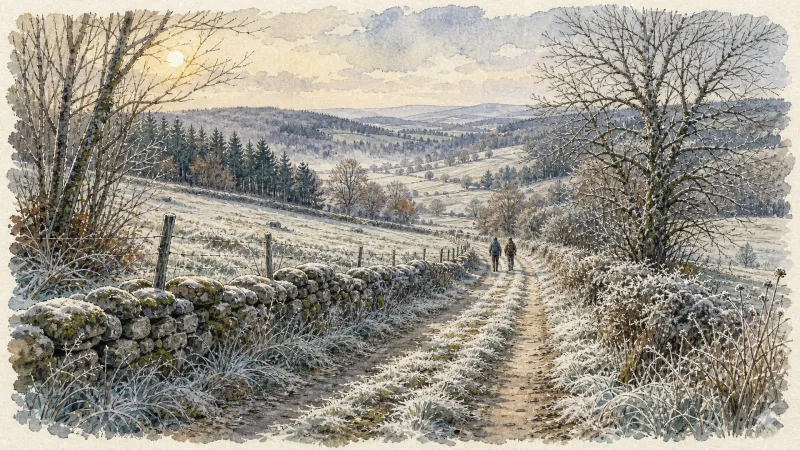
Forez circuit - Discover local skills and crafts (loop no. 6)
This circuit invites you to discover the skills and crafts of the Livradois through the themes of water and nature.
Circuit n°36 Le Tour d’Arlanc
Discover this trail through the heart of Livradois-Forez.
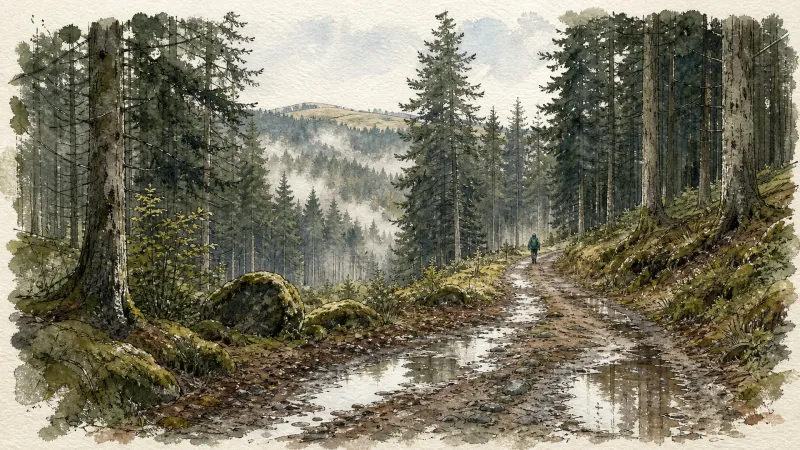
Masselèbre
This easy family walk leads from the Chaumont-le-Bourg priory to the lovely little village of Masselèbre, known for its bridge beneath which no river now flows.
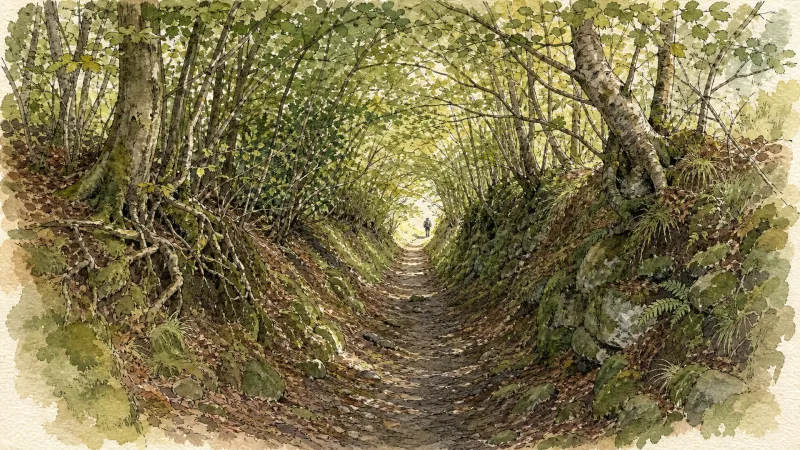
Montravel
This walk leads to the heights of the Forez and the site of Montravel, with its wide panorama over the Dore valley and the Livradois mountains.
Tour du Haut-Livradois et Abbayes (circuit route n°20)
Discover this trail through the heart of Livradois-Forez.
Explore Nearby
Complement your visit to Beurières by exploring these neighboring villages.
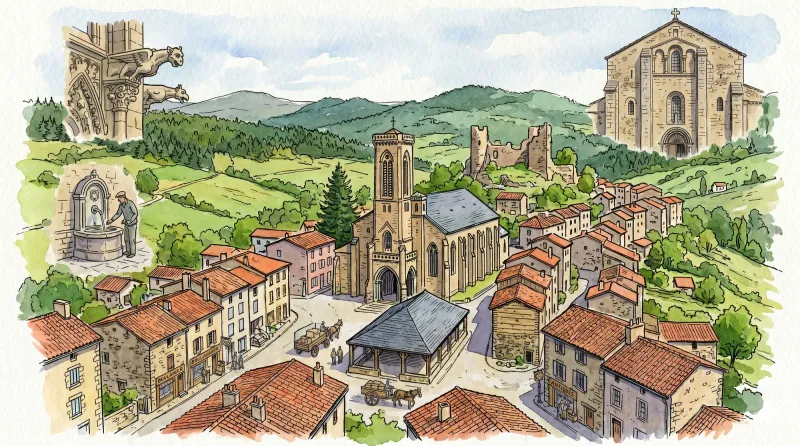
Arlanc
A center of rare optical curiosities and botanical cartography set within a profound geological rift.
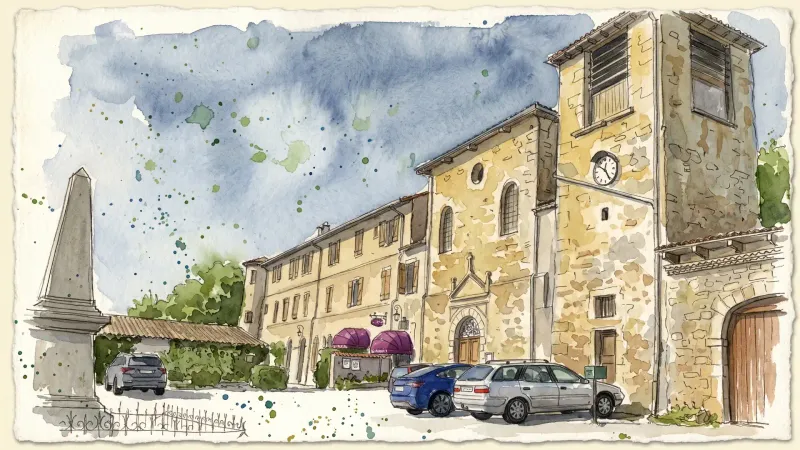
Chaumont-le-Bourg
An exploration of medieval stonework and Benedictine echoes on the "bald mount" of the Forez highlands.
Medeyrolles
A high-altitude sanctuary where the granite of the Forez meets a dense sea of spruce, offering a quiet, contemplative atmosphere for travelers seeking the raw textures of the Auvergne heights.
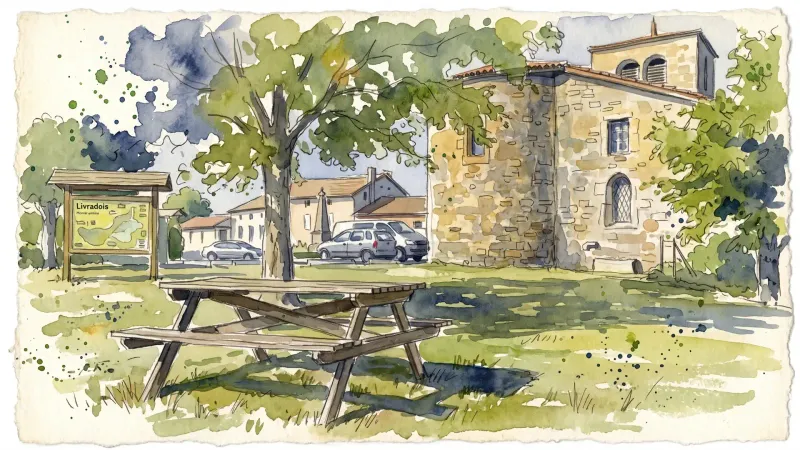
Saint-Just
A high-altitude sanctuary of dense pine forests and ancient granite hamlets, perfect for a contemplative afternoon immersion into the rugged soul of the Forez mountains.