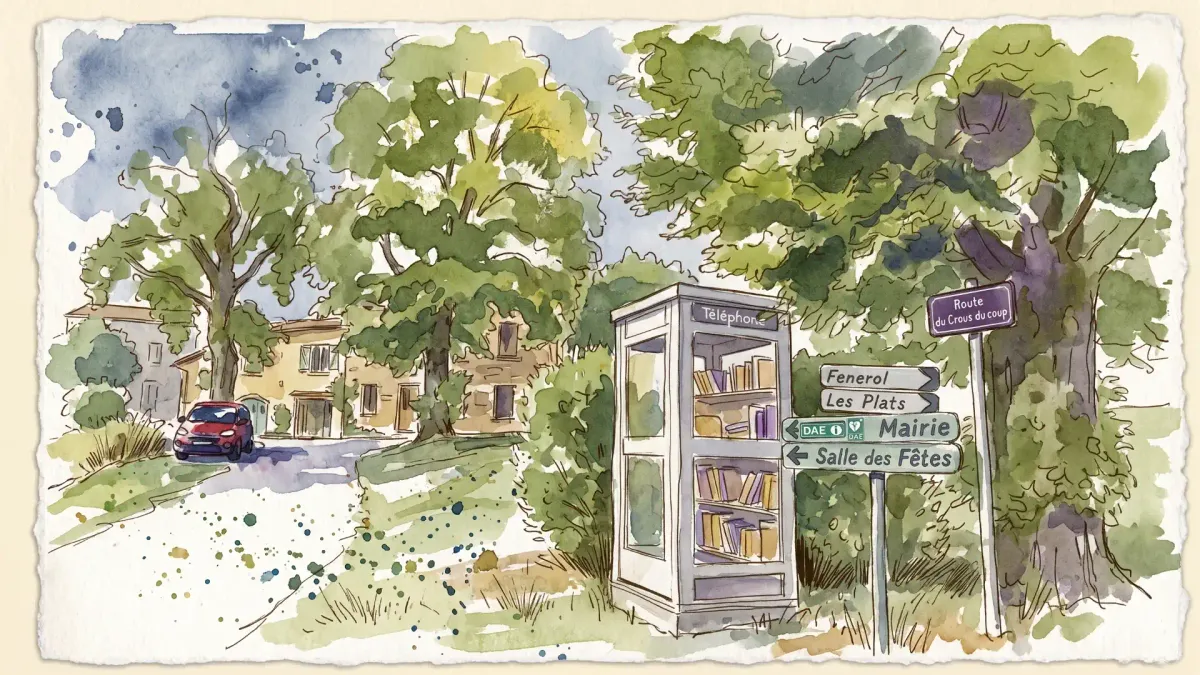
The ascent toward Estandeuil marks a transition into a landscape defined by the quiet authority of the mountain fringes. Here, the geography is one of dispersed hamlets, where the dominance of lush meadows gives way to the dense, cool shadows of oak and pine woods covering nearly a third of the territory. The air carries a distinct freshness, a characteristic of the high altitudes that peak at 626 meters, offering a temperate clarity that contrasts with the heavier warmth of the lowlands. Wandering through this rural expanse, one encounters the rhythmic interplay of agricultural labor and wild woodland, a setting that has remained largely unchanged in its spatial distribution for centuries.
Perched with a defensive gaze that betrays its medieval origins, the Château de la Rochette serves as a stoic witness to the 12th century. The fortress, once a formidable stronghold, has seen its noble lines revived through dedicated restoration, most notably in the preservation of its central tower. The texture of the ancient masonry, weathered by eight hundred years of Auvergne winters, tells a story of feudal resilience. Visitors can observe the specific geometry of its defensive architecture, providing an intimate window into the military necessities of the High Middle Ages within the Forez region.
In the heart of the settlement, the Église Sainte-Madeleine offers a moment of architectural contemplation, its status as a protected monument reflecting its historical significance. The building anchors the village, which was known in the local Auvergnat tongue as Tanduelh, a name that echoes through the narrow lanes and stone-fronted houses. This site provides a quiet punctuation to an afternoon spent navigating the undulating topography of the Puy-de-Dôme. The interplay of light against the sacred stone and the surrounding silence of the dispersed hamlets create a refined atmosphere for those seeking the unhurried pulse of historical Auvergne.
Local profile
At a Glance
- Population
- 512
- Demonym
- —
- Altitude
- 452–626 m
- Forest
- 32%
residents
local residents
lowest to highest
commune coverage
Did You Know?
“The village name "Tanduelh" in the local Auvergnat dialect reflects its ancient linguistic roots before French standardization.”
Cultural Heritage
Protected historic monuments in Estandeuil
Eglise Sainte-Madeleine
Estandeuil
Ruines du Château fort de la Rochette
Estandeuil
Recent Wildlife & Flora Log
Nature observations recorded within 5km of Estandeuil.
Lamium purpureum L.
Common Wall Lizard
Awnless Geranium
Addersmeat
Lamium album L.
Common Cornsalad
Wood Anemone
Hawfinch
Striped Hawk-moth
Small Elephant Hawk-Moth
Trails around Estandeuil
Discover physical challenges and natural beauty in the immediate vicinity.
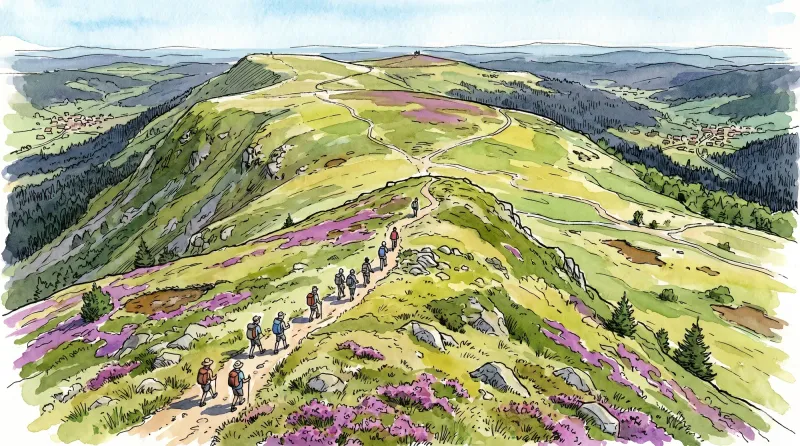
Livradois Circuit — The Châteaux of Livradois (Loop No. 4)
This circuit offers a journey through time, from the Gallo-Roman period to the age of knights.
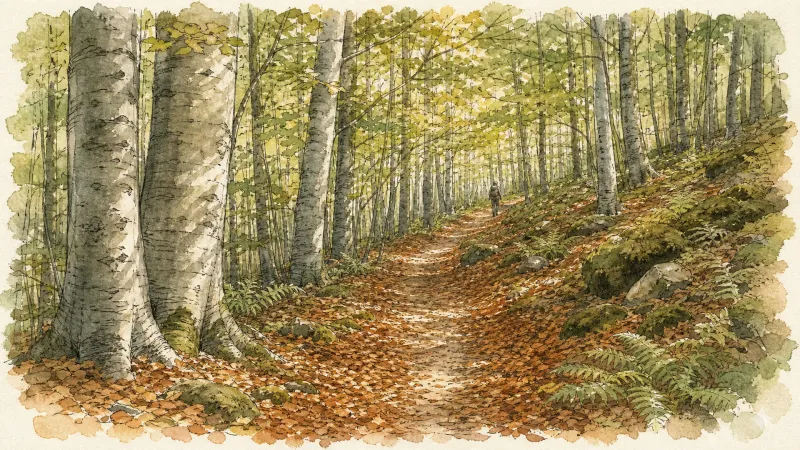
Weekend Circuit: Égliseneuve-près-Billom–Saint-Jean-des-Ollières
Explore this weekend circuit through the Madet valley, past Château de Mauzun and above Étang des Maures, with fine views of the Chaîne des Puys, the Monts Dore and the Forez mountains.
From Les Ribes to the Miodet
The fine fortified church of Saint-Dier, granite villages with immaculate coudercs, and the lively Miodet, once lined with mills, are the highlights of this walk through livestock-farming country.
Entre Comté et Pays d'Issoire (circuit route n°17)
Discover this trail through the heart of Livradois-Forez.
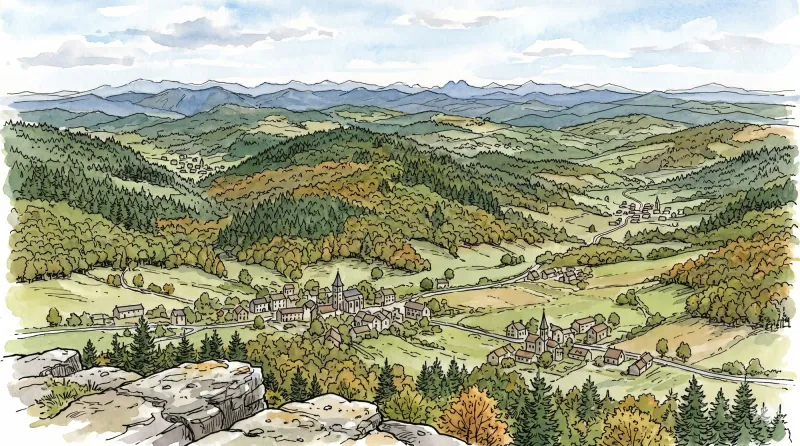
Bas-Livradois (Road Circuit No. 4)
After admiring the Romanesque priory church at Glaine-Montaigut, pause in Billom, a beautiful medieval town, before climbing the first Livradois foothills to Château de Montmorin and the imposing fortress of Mauzun.
Château de Mauzun
On land inhabited since prehistoric times, Château de Mauzun, once a residence of the bishops of Clermont, overlooks farms and hamlets scattered across the poor soil.
Explore Nearby
Complement your visit to Estandeuil by exploring these neighboring villages.
Bongheat
A sophisticated transit point between the Limagne plains and the Livradois highlands, characterized by feudal towers and golden arkose stone.
Fayet-le-Château
A high-altitude granite sanctuary where ancient beech forests meet the remnants of a master stone-cutting heritage and prehistoric megaliths.
Mauzun
A formidable journey into the ruins of Auvergne’s most expansive medieval fortress, where basalt peaks meet the echoes of episcopal power.
Saint-Dier-d'Auvergne
A journey through 11th-century feudal architecture and Revolutionary defiance, set against the steady flow of the Miodet river in the Livradois mountains.
Saint-Jean-des-Ollières
A journey into the volcanic heights of the Livradois, where ancient basaltic flows and the curious history of the "Piqueurs"—itinerant masters of disguise—converge.
Trézioux
A landscape defined by ancient viticultural traditions and Romanesque sobriety, offering a quiet meditation on the rural rhythms of the Livradois-Forez.