Illustration in progress
The Romanesque Église Saint-Didier stands as a somber sentinel of the 11th century, its weathered stone facade articulating the architectural austerity of the early Middle Ages. Those wandering through the village center will encounter the remnants of the ancient priory, an ecclesiastical complex that once dictated the spiritual and economic rhythm of these Livradois slopes. Inside the church, the air remains thick with the scent of damp granite and centuries of incense, while the narrow apertures in the masonry allow precise shafts of light to illuminate the transition between the sacred interior and the secular world outside.
Beyond the immediate village core, the landscape is punctuated by the assertive silhouettes of feudal authority. The Château des Martinanches, positioned a few kilometers toward the southern horizon, offers a masterclass in defensive elegance, its 11th-century foundations reflected in the dark, still waters of its surrounding moats. Closer to the town, the Château de Boissonnelle provides a similarly noble profile, its ancient lines integrated into the undulating topography of the valley. These structures are not merely static relics but serve as the physical manifestations of a time when the rugged terrain of the Massif Central was forged into a network of aristocratic bastions.
The pulse of the commune is felt most strongly along the banks of the Miodet river, which carves a path through the valley floor toward its confluence with the Dore. At the Moulin de Graveyrou, the persistent mechanical hum of a working flour mill underscores the village’s enduring connection to traditional industry and the power of the water. This stoic relationship with the land is mirrored in the local history of political transformation; the community famously shed its saintly identity during the Revolutionary era to embrace the name “Pont-Libre.” This spirit of independence persists today, framed by the dense forests that cover nearly a third of the territory and the refined 18th-century geometry of the Hôtel de Costilhes.
Local profile
At a Glance
- Population
- 556
- Demonym
- —
- Altitude
- 416–700 m
- Forest
- 32%
residents
local residents
lowest to highest
commune coverage
Did You Know?
“During the height of the French Revolution, the commune temporarily abandoned its religious namesake to be officially known as "Pont-Libre."”
Cultural Heritage
Protected historic monuments in Saint-Dier-d'Auvergne
Hôtel de Costilhes
Saint-Dier-d'Auvergne
Eglise Saint-Didier et ancien prieuré
Saint-Dier-d'Auvergne
Château des Martinanches
Saint-Dier-d'Auvergne
Recent Wildlife & Flora Log
Nature observations recorded within 5km of Saint-Dier-d'Auvergne.
Lamium purpureum L.
Common Wall Lizard
Awnless Geranium
Addersmeat
Lamium album L.
Common Cornsalad
Violet Oil-beetle
Wood Anemone
Creeping Charlie
Fig buttercup
Trails around Saint-Dier-d'Auvergne
Discover physical challenges and natural beauty in the immediate vicinity.
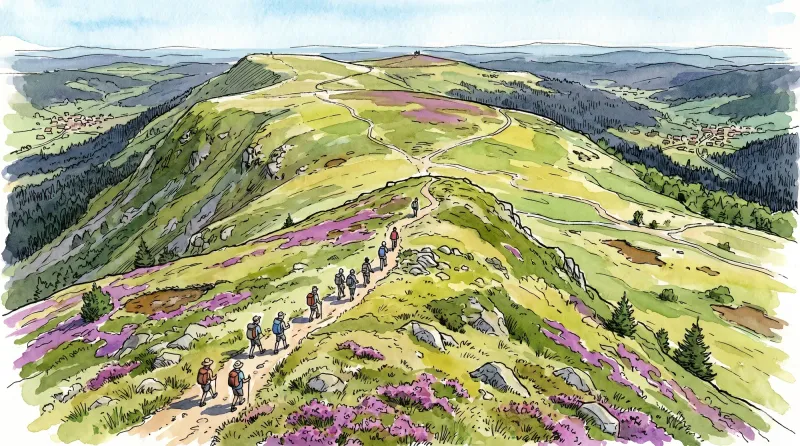
From Les Ribes to the Miodet
The fine fortified church of Saint-Dier, granite villages with immaculate coudercs, and the lively Miodet, once lined with mills, are the highlights of this walk through livestock-farming country.
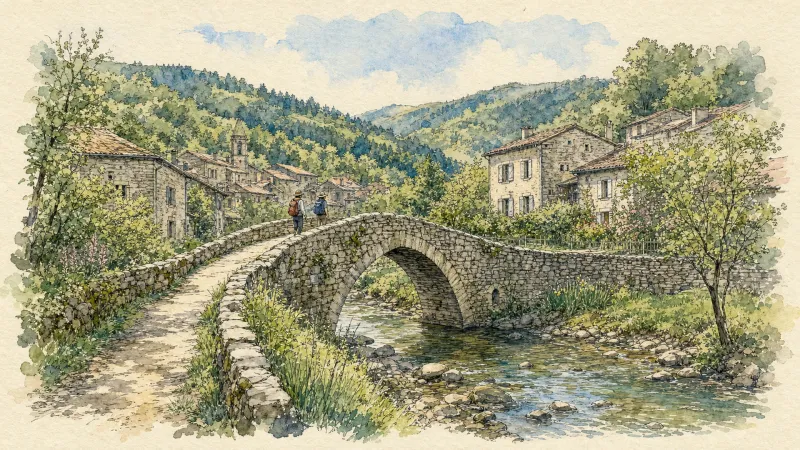
En passant par Olliergues (circuit route n°15)
Discover this trail through the heart of Livradois-Forez.
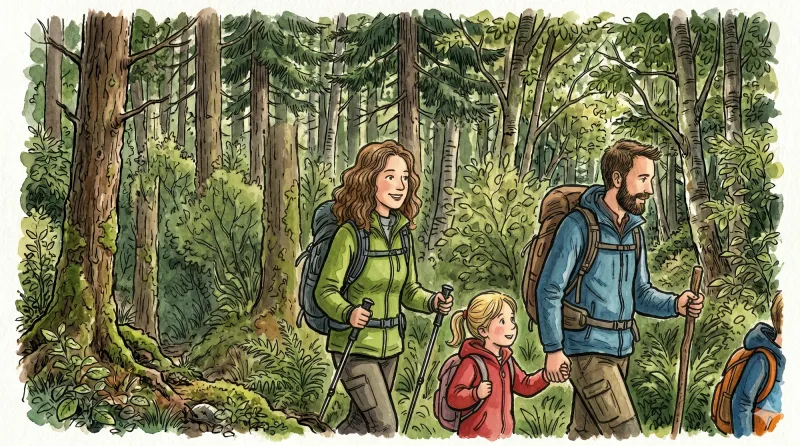
Entre Comté et Pays d'Issoire (circuit route n°17)
Discover this trail through the heart of Livradois-Forez.
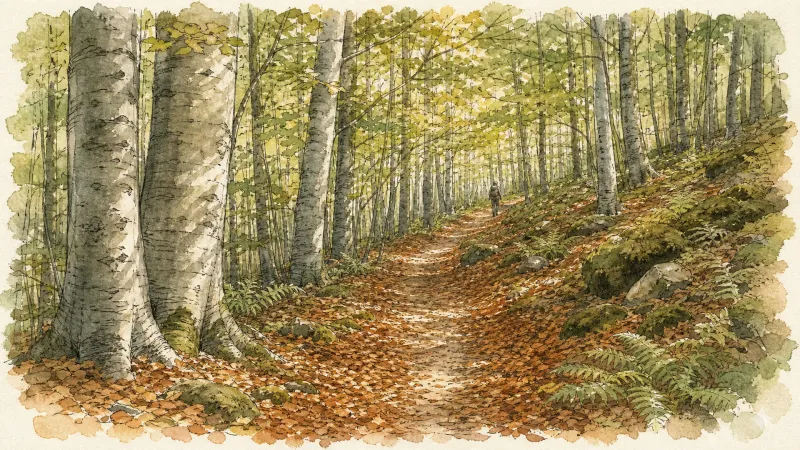
Le château de Mauzun (circuit route n°9)
Discover this trail through the heart of Livradois-Forez.
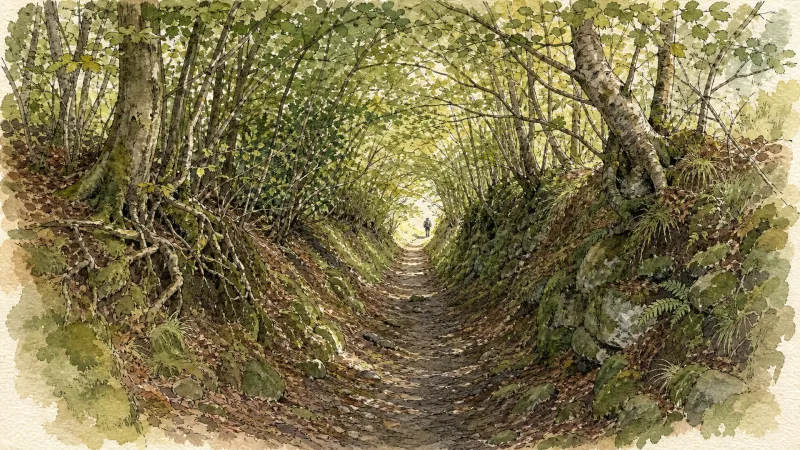
Virée en Haut-Livradois (circuit route n°5)
Discover this trail through the heart of Livradois-Forez.
Explore Nearby
Complement your visit to Saint-Dier-d'Auvergne by exploring these neighboring villages.
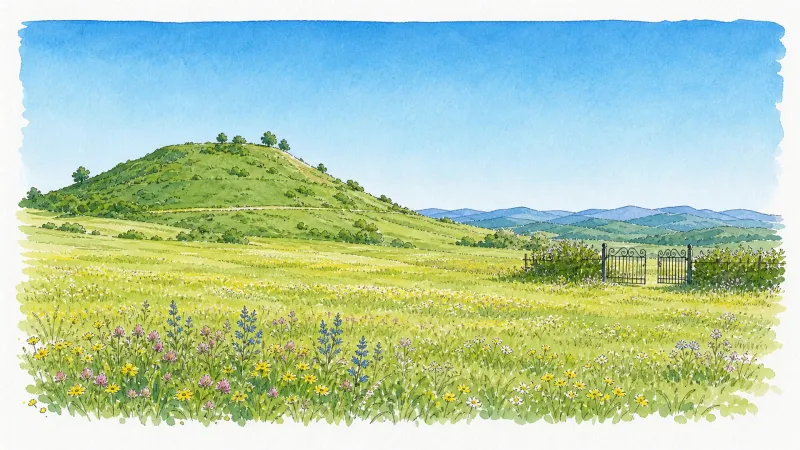
Auzelles
A high-altitude sanctuary of dense woodland and medieval echoes, where the origins of the powerful Montboissier dynasty were forged atop an earthen motte.
Ceilloux
A high-altitude sanctuary of dispersed hamlets and medieval sacred art, where the silence of the Livradois forests meets the enduring granite of a 15th-century parish church.
Domaize
A quiet pastoral landscape defined by its Renaissance stone, cinematic echoes, and the rare elegance of Akhal-Teke horses.
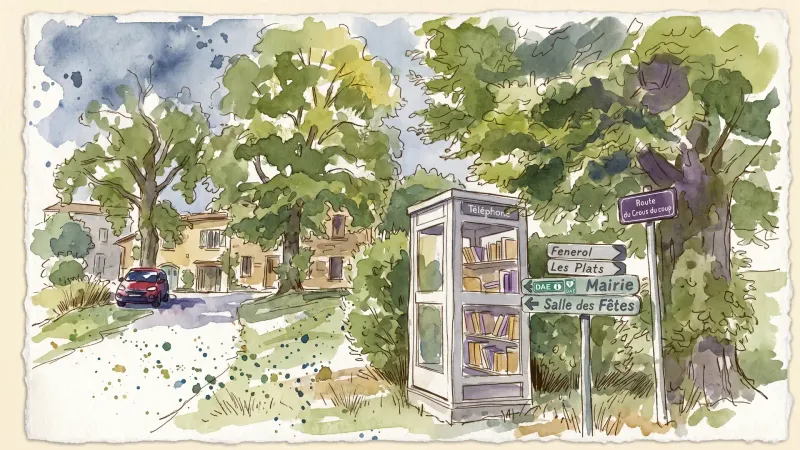
Estandeuil
A serene landscape of high meadows and medieval remnants, where a 12th-century fortress and a historic church stand amidst the deep forests of the Livradois.
Saint-Flour-l'Étang
A tranquil riverine escape where the Dore and Miodet converge, offering a landscape of hydraulic heritage and ancient, dispersed agricultural hamlets.
Saint-Jean-des-Ollières
A journey into the volcanic heights of the Livradois, where ancient basaltic flows and the curious history of the "Piqueurs"—itinerant masters of disguise—converge.
Trézioux
A landscape defined by ancient viticultural traditions and Romanesque sobriety, offering a quiet meditation on the rural rhythms of the Livradois-Forez.