Illustration in progress
The village center is dominated by an architectural hybrid: a parish church that bears the rugged scars of 14th-century fortification alongside 16th-century refinements. Within these cool, vaulted interiors, the sacred art commands attention through the vibrant, time-worn pigments of its polychrome wood statuary. One encounters a 17th-century Saint George locked in his eternal struggle with the dragon, a piece of such craftsmanship that it elevates the simple granite surroundings to a gallery of devotional history. The tactile presence of a 12th-century Romanesque capital, now serving as a vessel for holy water, bridges the temporal gap between the medieval artisan and the contemporary observer.
Descending toward the banks of the Dore at the hamlet of Giroux, the 15th-century Pont du Diable spans the water with a gravity-defying grace that fueled local folklore for centuries. This arched stone structure, shared with the neighboring commune of Saint-Gervais-sous-Meymont, serves as a testament to late-medieval engineering, its weathered masonry enduring the seasonal rhythms of the river. The surrounding landscape, a dense tapestry of forest and meadow, offers a silent backdrop to this crossing point where the air remains heavy with the scent of damp earth and ancient moss. It is a location for slow observation, where the play of light on the water reveals the enduring strength of the region’s historical infrastructure.
Beyond the stone monuments, the commune preserves a living heritage within its conservatory orchard, a two-hectare expanse dedicated to the survival of ancestral fruit varieties. Managed with ecological precision by the Conservatoire d’espaces naturels, these trees represent a botanical archive, safeguarding flavors and genetic legacies that have nearly vanished from the modern palate. This dedication to preservation mirrors the quiet dignity of the Château du Bourgnon, an 18th-century residence whose noble proportions rose from the earth during the final decades of the Ancien Régime. Together, these elements form a destination of quiet intellectual depth, where the preservation of a rare apple variety is held in the same high regard as the maintenance of a feudal ruin.
Local profile
At a Glance
- Population
- 542
- Demonym
- —
- Altitude
- 360–823 m
- Forest
- 25.9%
residents
local residents
lowest to highest
commune coverage
Did You Know?
“The village church contains a 12th-century Romanesque capital that was ingeniously repurposed into a holy water font.”
Cultural Heritage
Protected historic monuments in Tours-sur-Meymont
Château du Bourgnon
Tours-sur-Meymont
Eglise Saint-Georges
Tours-sur-Meymont
Pont du Diable, sur la Dore, à Giroux (également sur commune d'Olliergues)
Tours-sur-Meymont
Recent Wildlife & Flora Log
Nature observations recorded within 5km of Tours-sur-Meymont.
Winter Jasmine
Creeping Charlie
Fig buttercup
Alpine Newt
Aligot comú
Gatekeeper
European Goldenrod
Linaria repens (L.) Mill.
wolfsbane
Fireweed
Trails around Tours-sur-Meymont
Discover physical challenges and natural beauty in the immediate vicinity.
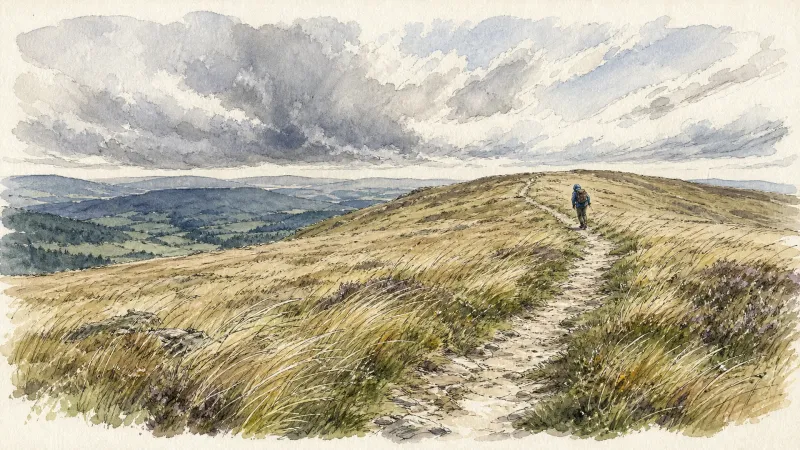
Dore Loop
The Livradois-Forez Regional Natural Park, a land of grassland and woodland, promises a memorable journey between valleys and ridges.
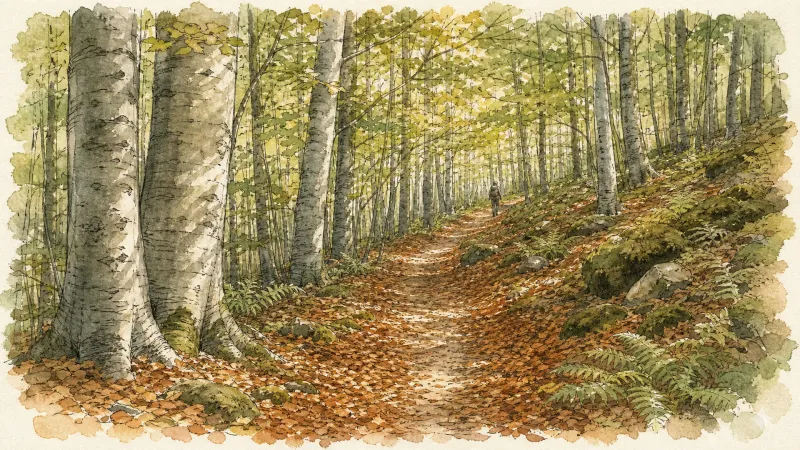
Circuit n°46 Le Val de Mende
Secteur Cunlhat
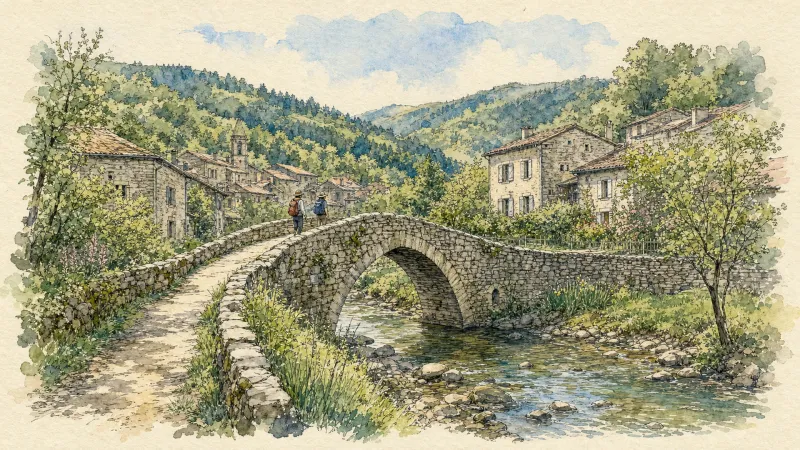
En passant par Olliergues (circuit route n°15)
Discover this trail through the heart of Livradois-Forez.
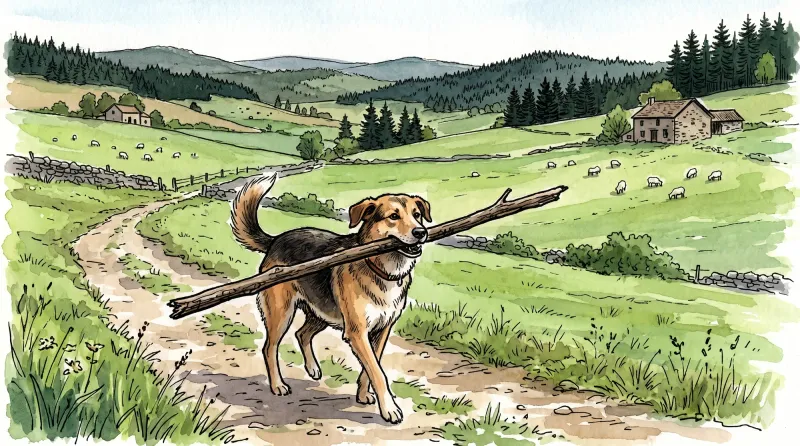
Great Livradois-Forez Mountain-Bike Traverse
In the heart of Auvergne, the Great Livradois-Forez Traverse takes you around the Livradois-Forez Regional Natural Park, between two mountain ranges rising from 400 m to 1,600 m.
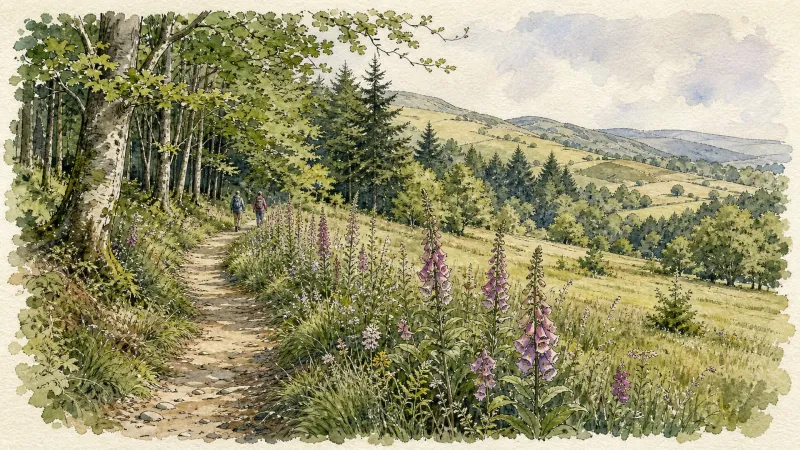
The Fruit Tree Circuit
Some are a hundred years old or more, when they have escaped disease, land consolidation and untimely removal. They are the fruit trees of Livradois-Forez, which once grew alongside the vines before replacing them more than a century ago.
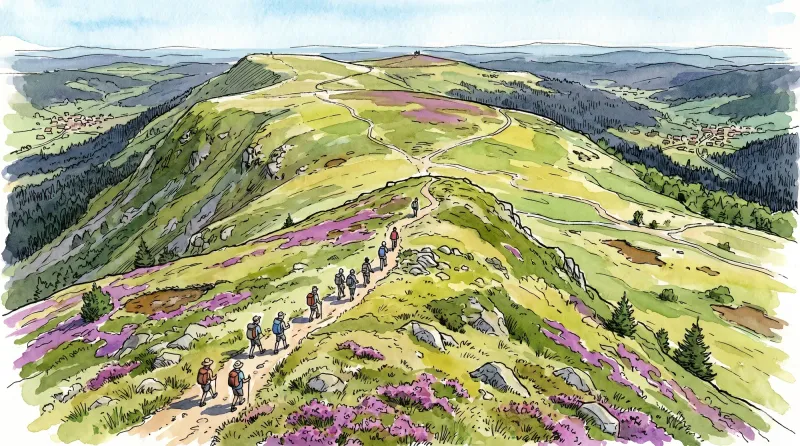
Les Cols des Crêtes du Forez (circuit route n°31)
Discover this trail through the heart of Livradois-Forez.
Explore Nearby
Complement your visit to Tours-sur-Meymont by exploring these neighboring villages.
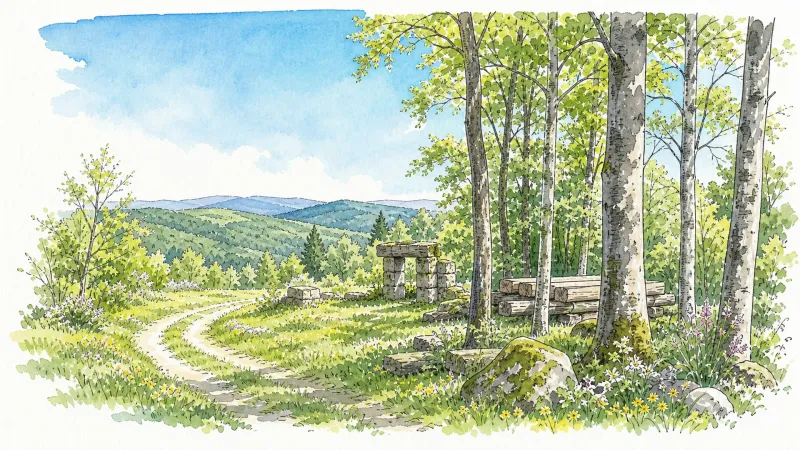
Augerolles
A journey into the origins of Roman nobility and the architectural layering of the Livradois-Forez, where ruined fortresses and timber-wealthy châteaux tell a tale of ascent and revolution.
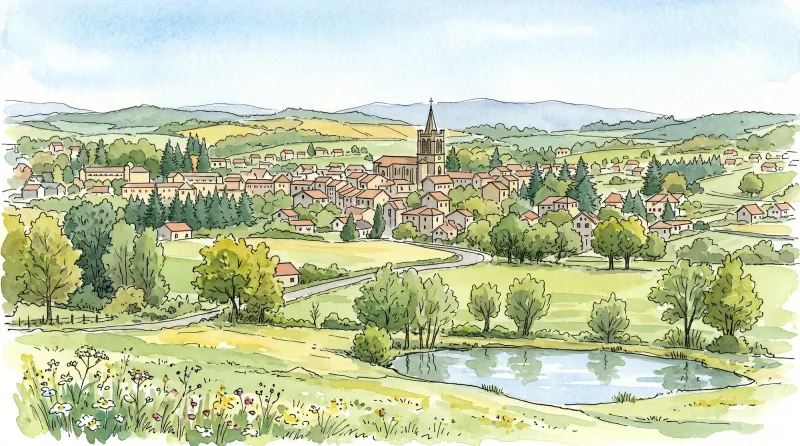
Cunlhat
A high-altitude sanctuary of Benedictine heritage and cinematic history, where medieval stone meets the avant-garde.
Domaize
A quiet pastoral landscape defined by its Renaissance stone, cinematic echoes, and the rare elegance of Akhal-Teke horses.
La Chapelle-Agnon
A high-altitude sanctuary where deep forests meet the austere beauty of 12th-century stone, offering a profound immersion into the literary and geological soul of the Livradois.
Olliergues
A medieval riverside destination where the Turenne dynasty once held court, offering a rich tapestry of bridge-spanning legends and neo-renaissance architecture.
Saint-Gervais-sous-Meymont
A journey through the administrative heart of the Livradois-Forez, featuring a rare covered bridge over the Dore and deep immersion in high-altitude forestry.
Sauviat
A high-perched sentinel overlooking the deep granite fissures of the Dore valley, where the ruins of a Benedictine priory and a partially dismantled fortress tell a story of medieval power and revolutionary fervor.