Illustration in progress
The ascent toward the crests of the Livradois reveals a landscape defined by a brooding density of woodland, where the transition from the lower valleys to the 1,003-meter summit alters the very clarity of the air. This is a territory of scattered hamlets—Hivernôge, La Madeyre, and the evocative Chante Oiseau—each a small cluster of stone resisting the encroachment of the surrounding forest, which claims nearly sixty percent of the land. The rhythm of an afternoon wandering here is dictated by the play of light through the heavy canopy of the Massif Central, casting long shadows over the granite outcrops that once earned this village its revolutionary moniker of Pierre-Blanche.
At the core of the village stands the Église Saint-Blaise, a structure that preserves the stoic transition from its twelfth-century Romanesque foundation to more articulated fifteenth-century refinements. The masonry possesses a rugged, tactile quality, a testament to the endurance of the local Chapeloux spirit against the biting mountain winters. Inside, the silence is heavy and reverent, framed by architectural lines that echo the nobility of medieval craftsmanship. It serves as a stark, beautiful focal point for an hour of contemplation, where the structural severity is softened only by the expansive views of the rolling Auvergne horizon visible from the churchyard.
The intellectual legacy of these slopes is inextricably tied to the geographer and novelist Lucien Gachon, whose prose captured the arduous yet poetic reality of rural life. Born in the hamlet of La Guillerie, Gachon’s literary voice was tempered by the same winds that sweep across the plateau, eventually earning the patronage of the famed Henri Pourrat. To traverse the footpaths connecting the various “écarts” is to walk through the living setting of his 1925 masterpiece, Maria, where the relationship between the inhabitants and the formidable topography is rendered with surgical precision. It remains a destination for those seeking to understand the profound silence of the high Forez, where history is written in the enduring grain of the timber and the unyielding weight of the mountain stone.
Local profile
At a Glance
- Population
- 361
- Demonym
- Chapeloux
- Altitude
- 470–1003 m
- Forest
- 58.3%
residents
local residents
lowest to highest
commune coverage
Did You Know?
“During the radical fervor of the French Revolution, the commune shed its religious title to become "Pierre-Blanche," an homage to the stark white stones that define its rugged landscape.”
Cultural Heritage
Protected historic monuments in La Chapelle-Agnon
Eglise Saint-Blaise
La Chapelle-Agnon
Recent Wildlife & Flora Log
Nature observations recorded within 5km of La Chapelle-Agnon.
Lamium album L.
English Primrose
Beech
Common Spruce
Blue Barberry
Common Wood Sorrel
Teucrium scorodonia L.
Alpine Newt
Chaffinch
Great Tit
Trails around La Chapelle-Agnon
Discover physical challenges and natural beauty in the immediate vicinity.
Dore Loop
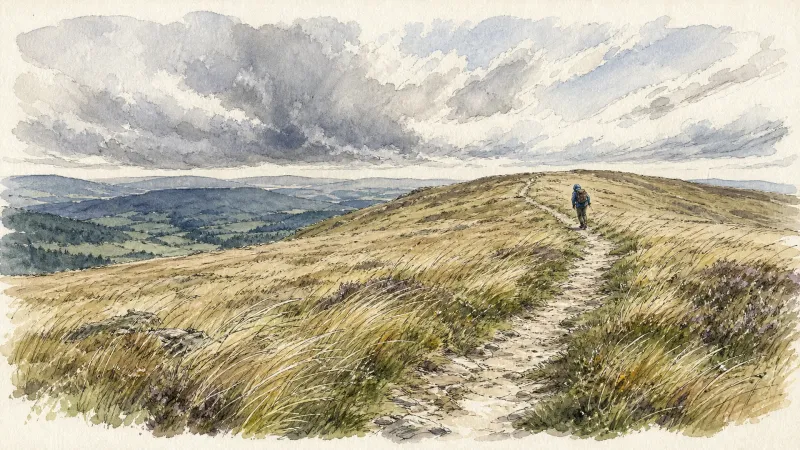
The Livradois-Forez Regional Natural Park, a land of grassland and woodland, promises a memorable journey between valleys and ridges.
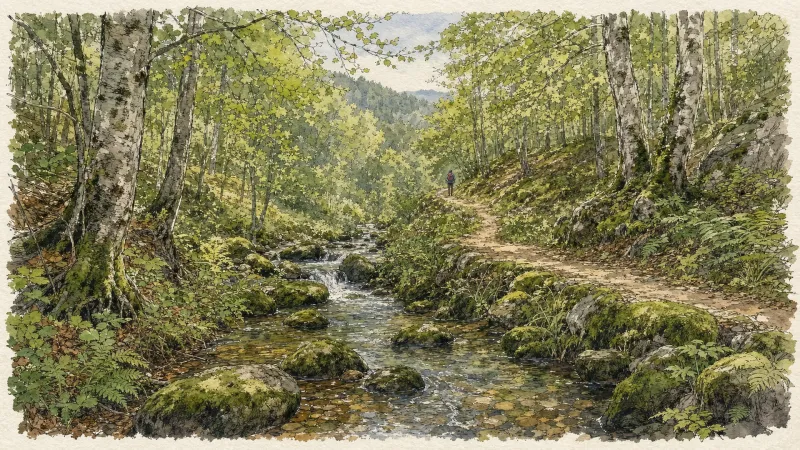
Circuit n°44 Les Cimes du Livradois
Secteur St-Amant-Roche-Savine
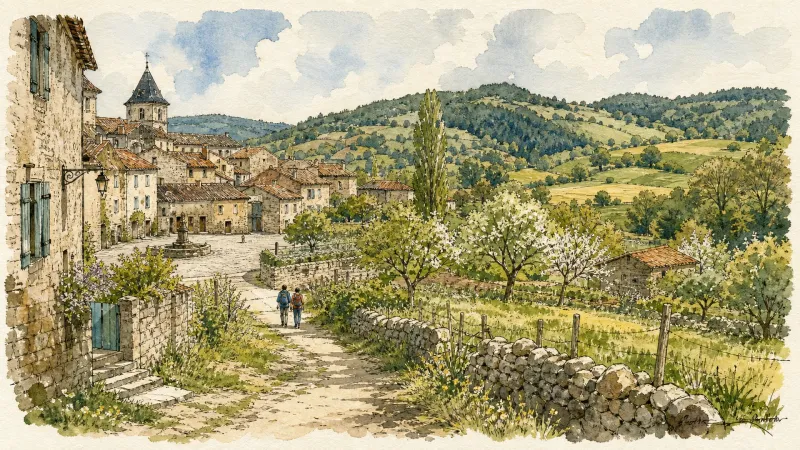
Circuit n°45 Le Tour des Sucs
Secteur St-Amant-Roche-Savine
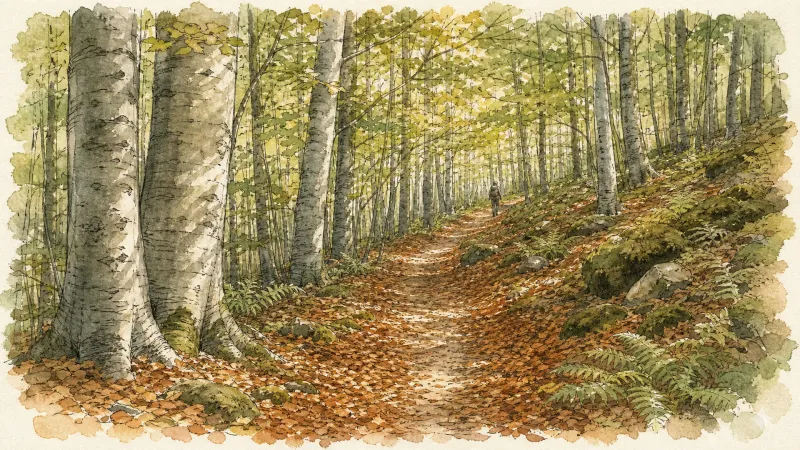
Circuit n°46 Le Val de Mende
Secteur Cunlhat
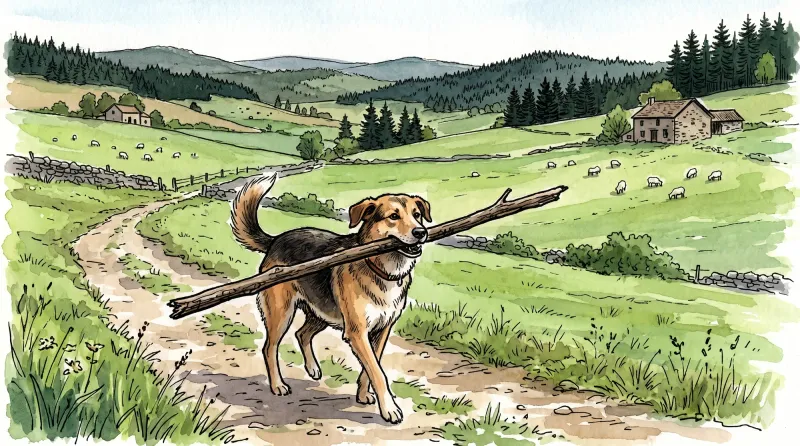
Great Livradois-Forez Mountain-Bike Traverse
In the heart of Auvergne, the Great Livradois-Forez Traverse takes you around the Livradois-Forez Regional Natural Park, between two mountain ranges rising from 400 m to 1,600 m.
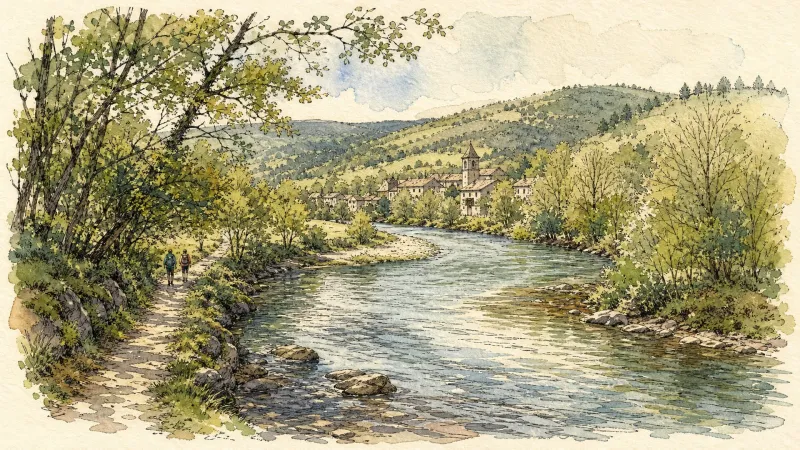
La Chapelle-Agnon
Start at the church in La Chapelle-Agnon. Descend on the D267 and take the first left. At the cemetery, go straight ahead, then turn right by a stone cross. (1) At the junction turn right, then right again at the fork towards La Collange. (2) Before the hamlet, follow the paved track left and continue straight. Descend on a path to the junction beside an isolated house. (3) Turn left and continue north, ignoring several tracks on both sides. (4) Staying on the hillside, cross La Combas and Le Mouhet, take the road left to Le Paton, then bear left within the hamlet. (5) On leaving Le Montel, take the track left and climb along the forest edge. Continue to the road above Le Varrat. Follow it left, ignoring forestry tracks. (6) At Le Crouhet, take the path descending into the valley in front of the house on the right. Cross the Sardie stream and climb below Farnouze. (7) At the junction turn left, cross a small stream, climb and continue on the track right. After the large ruined building, turn left. (8) At Farges, follow the edge of the hamlet and take the path descending left to the stream. Cross it and climb to the D37, following it for 100 m. At the fork turn left to return to the cemetery and church.
Explore Nearby
Complement your visit to La Chapelle-Agnon by exploring these neighboring villages.
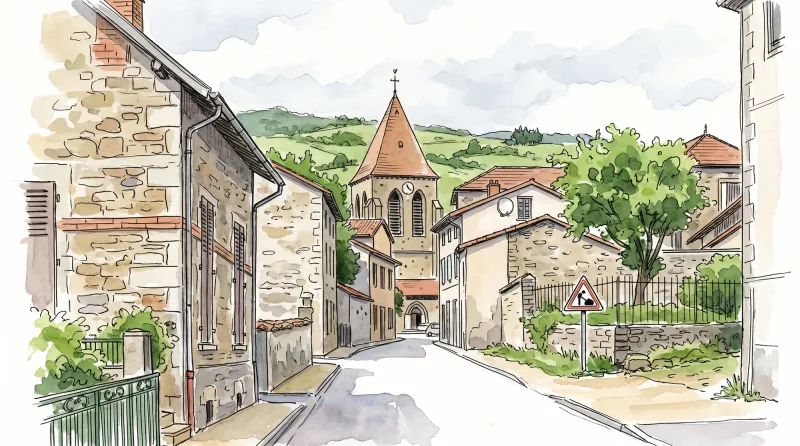
Bertignat
An evocative ascent through the granite-strewn forests of the Livradois, where Gallo-Roman echoes meet the austere beauty of 15th-century stone.
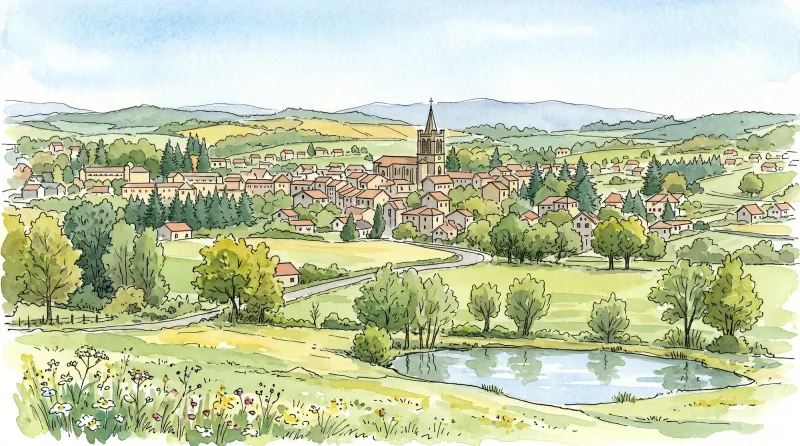
Cunlhat
A high-altitude sanctuary of Benedictine heritage and cinematic history, where medieval stone meets the avant-garde.
Grandval
A high-altitude sanctuary of dense forests and late-Gothic architecture, offering profound insights into the rural social structures that inspired world-renowned anthropology.
Marat
A journey through the high forests of the Dore valley, where medieval ruins and 14th-century masonry overlook a landscape of eighty ancient hamlets.
Saint-Amant-Roche-Savine
A high-altitude sanctuary of literature and stone where the rugged Livradois landscape meets the refined echoes of 20th-century French prose.
Saint-Gervais-sous-Meymont
A journey through the administrative heart of the Livradois-Forez, featuring a rare covered bridge over the Dore and deep immersion in high-altitude forestry.
Tours-sur-Meymont
A sanctuary of medieval fortification and rare botanical heritage, where 15th-century stone spans the Dore and ancient orchards preserve the flavors of the past.