Illustration in progress
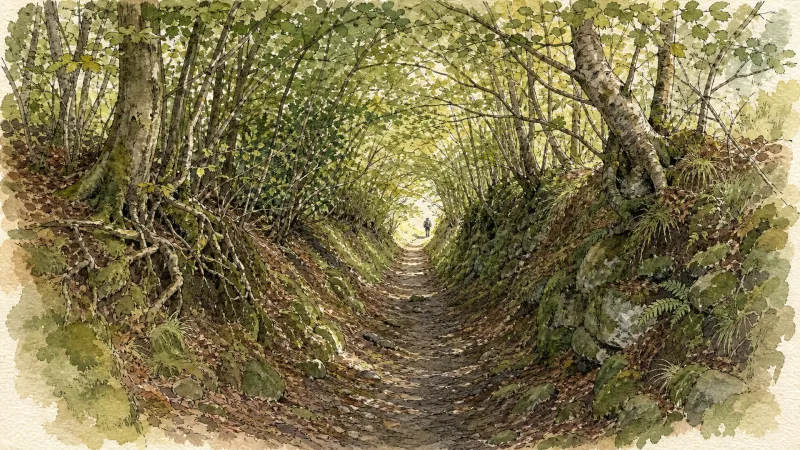
The ascent toward Saint-Préjet-Armandon demands an appreciation for the verdant density that defines the high-altitude reaches of the Haute-Loire. Here, the canopy claims nearly eighty percent of the landscape, creating a sanctuary of deep shade and filtered light that shifts in intensity as the road climbs from the lower basins toward the eight-hundred-meter peaks. The air carries the sharp, resinous scent of pine and the cool dampness characteristic of the mountain margins, offering a sensory departure from the sun-drenched valleys of the Allier. It is a terrain of scattered stone and profound silence, where the geography feels both ancient and untamed, perfectly suited for an afternoon of quiet contemplation amidst the rhythmic swaying of the highland woods.
At the heart of this sparsely populated domain stands the Église Saint-Préjet, a structure that whispers of the medieval spiritual authority once wielded in these remote heights. In the late eighteenth century, the village functioned as a priory under the jurisdiction of the Bajasse leprosarium, a historical tie that lends a somber, noble weight to the local history. The masonry of the church reflects the rugged resilience of the Auvergne, with weathered textures that have endured centuries of shifting political and religious tides. Walking the perimeter of this ecclesiastical remnant, one can trace the lines of a past where faith and geographical isolation were the twin pillars of existence in the shadow of the Massif Central.
The revolutionary spirit of the late eighteenth century briefly stripped the commune of its hagiographic title, rebranding the village as Mont-Pregeix to align with the secular ideals of the National Convention. This temporal shift from saintly patronage to a purely geographic descriptor highlights the enduring identity of the location as a high-altitude sentinel. Today, the rhythm of life is dictated by the seasons rather than the clock, with the scattered dwellings providing a stark, minimalist contrast to the lush, surrounding forestry. A visit here offers a rare opportunity to observe the stoic beauty of a landscape that has largely resisted the encroachment of modernity, remaining a bastion of stillness for the wandering historian.
Local profile
At a Glance
- Population
- 105
- Demonym
- —
- Altitude
- 506–853 m
- Forest
- 79.8%
residents
local residents
lowest to highest
commune coverage
Did You Know?
“During the height of the French Revolution, the commune renounced its saintly name to become the secular "Mont-Pregeix."”
Cultural Heritage
A quiet village with authentic Auvergne charm.
Recent Wildlife & Flora Log
Nature observations recorded within 5km of Saint-Préjet-Armandon.
Cabbage Bug
Blue Shieldbug
Irish Saxifrage
False Morel
Carex montana L.
Marsh Valerian
Green Carpet
Striped Hawk-moth
Peach Blossom
Chrysotoxum lessonae Giglio-Tos, 1890
Trails around Saint-Préjet-Armandon
Discover physical challenges and natural beauty in the immediate vicinity.
Explore Nearby
Complement your visit to Saint-Préjet-Armandon by exploring these neighboring villages.
Berbezit
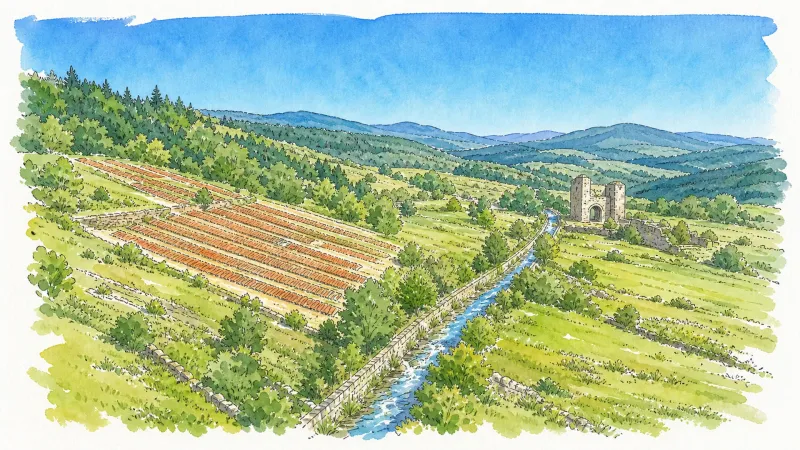
A high-altitude sanctuary on the granitic plateau of the Velay, where ancient mill ruins and a former seigneurial chapel are enveloped by a dense, resinous forest.
Chassagnes
A high-altitude sanctuary where ancient oak forests meet noble stone, offering a profound encounter with the quietude of the Haut Allier.
Collat
A high-altitude sanctuary of silence and granite, where the dense forests of the Haute-Loire meet the ancient social echoes of the Massif Central.
Montclard
A deep-valley sanctuary where silence is held by a comb-style bell tower and the skeletal remains of medieval power.
Saint-Didier-sur-Doulon
A vertical landscape of dense forests and feudal stone, where the Doulon river flows beneath the gaze of the monumental Château de Servières.
Vals-le-Chastel
A silent sentinel of stone and timber, this ancient feudal site offers a quiet immersion into 15th-century Auvergne through its fortified chapel and haunting medieval frescoes.