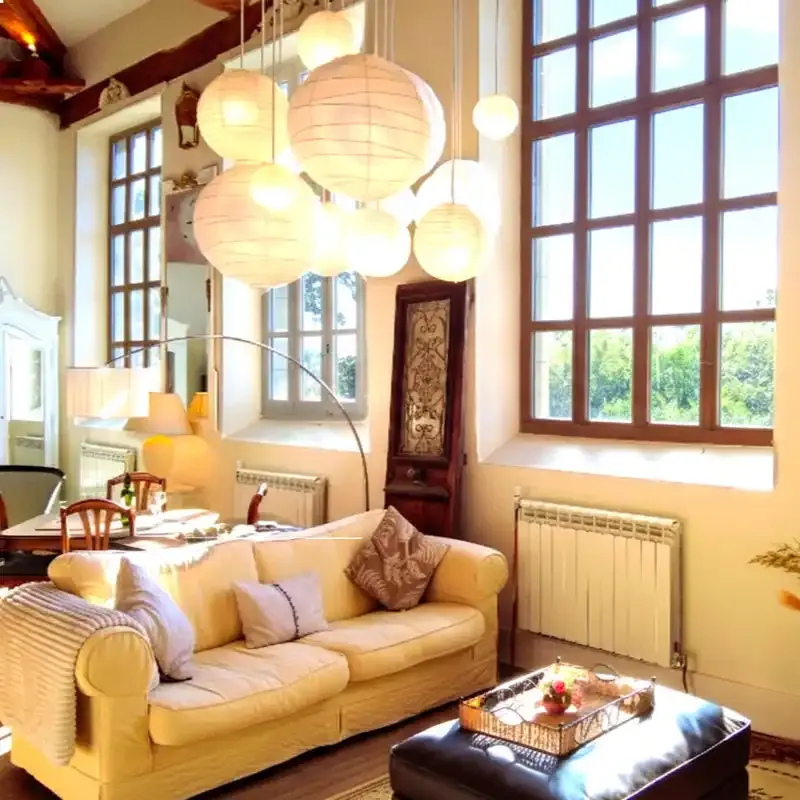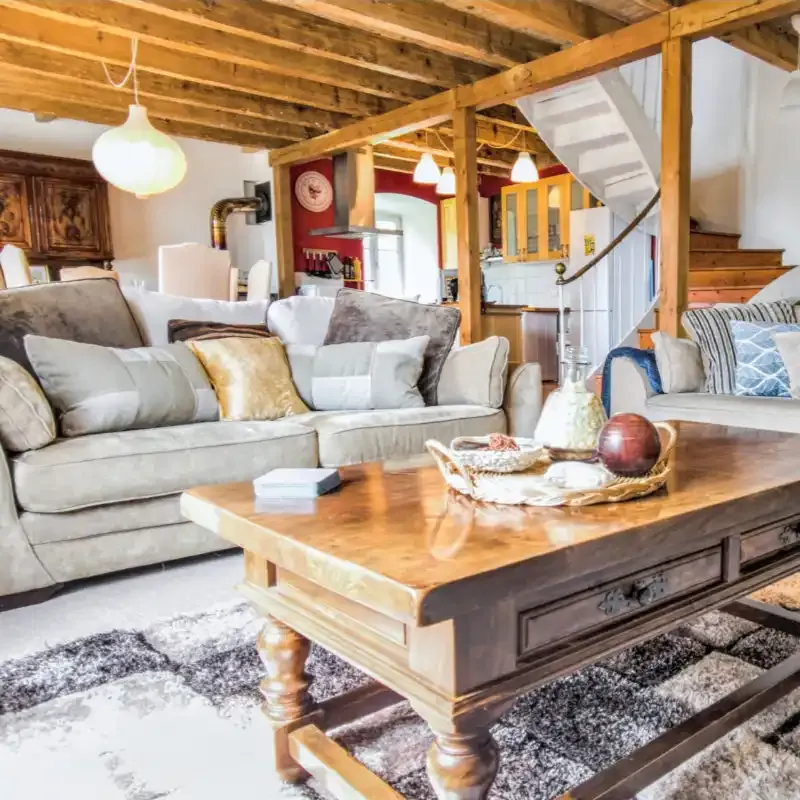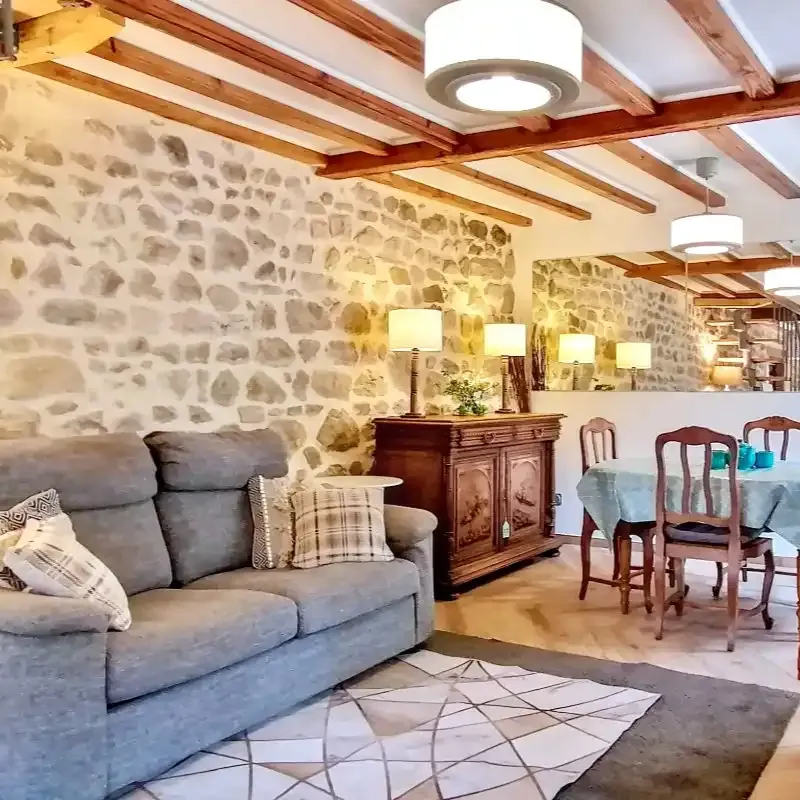
Illustration in progress
The ascent toward the western fringes of the Livradois-Forez reveals a landscape defined by volcanic logic and agricultural persistence. Here, the earth rises to nearly eight hundred meters, offering a topography where cultivated fields yield to thickets of oak and pine. Walking through the hamlets like Contournat, one senses the weight of the fifteenth-century masonry, where the stones of former seigneurial strongholds have been absorbed into the local architecture. The air carries the crispness of the mountain margins, a silent witness to the centuries of labor that shaped these sloping arable lands and isolated clusters of granite-framed dwellings.
On a prominent ridge, the Chapelle de Roche stands as a stark, eleventh-century sentinel of Romanesque purity. Its modest dimensions are elevated by the sophistication of its stone cornices and the weathered grit of the modillons that support the roofline, remnants of a vanished fortress that once commanded these heights. In the village center, the Gothic Église Saint-Julien offers a different rhythmic experience; its three-bayed nave and square, two-story tower project a sober nobility. The play of light across the chœur’s three facets provides a sanctuary of stillness, inviting visitors to observe the specific grain of the fourteenth-century masonry and the enduring silence of the vaulted interior.
The village’s identity is layered with moments of profound moral gravity, from its temporary rechristening as Roche-Coppel during the fervor of the Revolution to its silent role during the dark years of the mid-twentieth century. At the Maison de la Tourelle, the landscape provided more than just a view; it offered a vital sanctuary for Jewish children seeking refuge from the occupation, including the future senator Guy Schmaus. This legacy of protection adds a somber, resonant depth to the physical ruins of the Auzon dynasty. To wander these paths is to trace the echoes of a community that has navigated the tides of feudal power and modern upheaval with a quiet, stone-hewn resilience.
Local profile
At a Glance
- Population
- 1,281
- Demonym
- Coppellois
- Altitude
- 375–782 m
- Forest
- 18.9%
residents
local residents
lowest to highest
commune coverage
Did You Know?
“During the French Revolution, the commune shed its religious association to be known by the more rugged, secular title of Roche-Coppel.”
Cultural Heritage
Protected historic monuments in Saint-Julien-de-Coppel
Restes du Château fort de Coppel
Saint-Julien-de-Coppel
Eglise Saint-Julien
Saint-Julien-de-Coppel
Recent Wildlife & Flora Log
Nature observations recorded within 5km of Saint-Julien-de-Coppel.
Blessed Milk Thistle
Western Green Lacerta
Aesculapean Snake
Corzo
Appleyard's Feather-moss
Africanized honey bee
Silver-washed Fritillary
Bernat pescaire
Calopteryx virgo meridionalis Selys, 1873
Sycamore Lace Bug
Trails around Saint-Julien-de-Coppel
Discover physical challenges and natural beauty in the immediate vicinity.

Explore Nearby
Complement your visit to Saint-Julien-de-Coppel by exploring these neighboring villages.
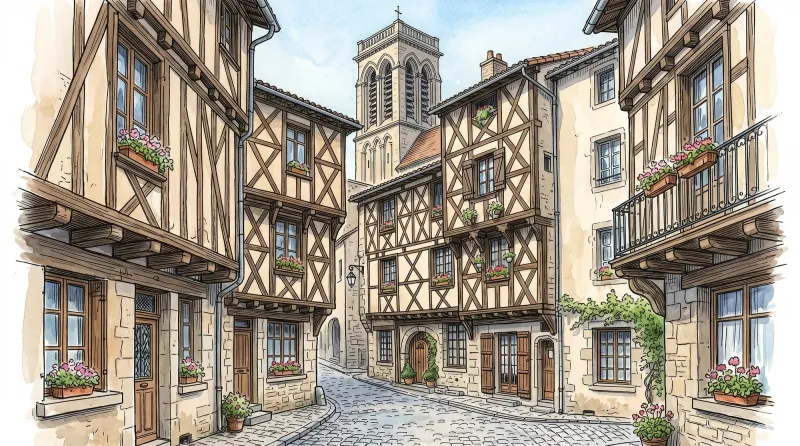
Billom
A medieval merchant capital known as the "Tuscany of Auvergne," where timber-framed architecture and a prestigious academic past define the landscape.
Isserteaux
A high-altitude landscape of dispersed hamlets and volcanic slopes, where Romanesque masonry and 19th-century estates overlook the rugged Livradois-Forez.
Montmorin
A high-altitude feudal stronghold offering a vertical journey through Auvergne’s noble past, anchored by a fortress that once commanded the strategic routes of the Livradois-Forez.
Sallèdes
A landscape where Italian Renaissance ambition meets the rugged timber of the Bois de la Comté, anchored by a singular, haunting fortress.