Illustration in progress
The ascent into Sallèdes reveals a landscape defined by the shifting moods of the Massif Central, where the pastoral openness of the Allier valley yields to the shadowed density of the Bois de la Comté. Here, the terrain rises toward volcanic plateaus, reaching an altitude of 815 meters where the air sharpens and the oaks stand in silent witness to centuries of agrarian rhythm. Walking these paths, one feels the weight of the Salledois heritage—a rural dispersed habitat where the silence is broken only by the wind through the timber and the occasional echo of a folk melody known as the “Scottish de Sallèdes,” a traditional air that still resonates in local memory.
Standing as a stark, decapitated sentinel against the hillside, the Château de La Chaux-Montgros represents a singular architectural pivot between medieval fortification and the refined elegance of the Italian Renaissance. Constructed in the early 16th century by the barons de La Guesle, its masonry bears the marks of a chaotic history, having survived cycles of aristocratic splendor and decades of post-war decay. The tactile presence of its weathered stone walls, though stripped of their former crowns, evokes a profound sense of temporal suspension, inviting the visitor to contemplate the ambition of lords who sought to transplant Mediterranean sophistication into the rugged heart of Auvergne.
Beyond its noble ruins, the village possesses a contemporary narrative woven with dry wit, evidenced by a 1995 legal ruling from the Court of Appeal of Riom that brought the hamlet of La Rochette into the national spotlight. This curious decree, which adjudicated a neighborly dispute by famously labeling a local hen too intellectually deficient to be a public nuisance, adds a layer of whimsical humanity to the austere granite surroundings. An afternoon spent traversing the quiet lanes reveals a community that balances this levity with a deep reverence for its environment, managed through the Maison des espaces naturels, ensuring the preservation of the rare flora that thrives in the volcanic soil.
Local profile
At a Glance
- Population
- 560
- Demonym
- Salledois
- Altitude
- 476–815 m
- Forest
- 32.9%
residents
local residents
lowest to highest
commune coverage
Did You Know?
“The village was immortalized in French legal history by a 1995 court ruling that declared a local chicken too "anodyne and stupid" to legally disturb the peace.”
Cultural Heritage
A quiet village with authentic Auvergne charm.
Recent Wildlife & Flora Log
Nature observations recorded within 5km of Sallèdes.
Dam koruğu
Early Star-Of-Bethlehem
Nursery Web Spider
Black Kite
Bernat pescaire
False Chamomile
Caper Spurge
Bird's-eye
Ash
Capsella bursa-pastoris (L.) Medik.
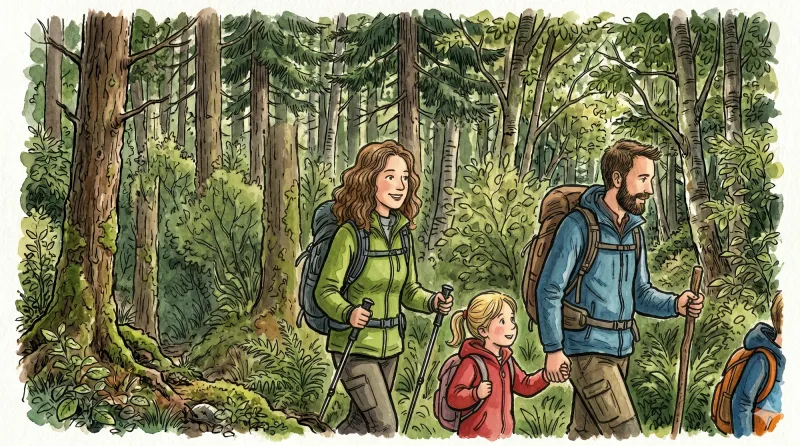
Trails around Sallèdes
Discover physical challenges and natural beauty in the immediate vicinity.
Explore Nearby
Complement your visit to Sallèdes by exploring these neighboring villages.
Isserteaux
A high-altitude landscape of dispersed hamlets and volcanic slopes, where Romanesque masonry and 19th-century estates overlook the rugged Livradois-Forez.
Manglieu
A profound encounter with Merovingian history and Romanesque architecture, where ancient marble columns and cinematic legends reside within a high-altitude monastic enclave.
Saint-Julien-de-Coppel
An evocative landscape of volcanic promontories and medieval fragments, ideal for an afternoon investigating Romanesque ruins and high-altitude vistas.