Illustration in progress
Ascending the granite slopes toward the high plateau, the traveler encounters a landscape defined by an austere and commanding beauty. The village takes its name from the Occitan “malva,” a reference to the mallow flowers that historically softened the rugged profile of the Livradois-Forez. At the center of the settlement stands the Église de la Nativité-de-la-Sainte-Vierge, a Romanesque structure of formidable endurance and listed historical significance. The weight of its 12th-century stone creates a profound internal stillness, where narrow apertures allow slivers of light to illuminate masonry that has remained largely unchanged since the medieval era.
Beyond the immediate cluster of village dwellings, the Château de Folgoux emerges from the greenery as a testament to the feudal hierarchies that once governed these heights. This fortified manor, characterized by its stern verticality and noble lines, commands an expansive view over the surrounding valleys. Its architecture reflects a deliberate transition from defensive necessity to seigneurial elegance, with its heavy walls preserved against the relentless alpine winds that sweep across the plateau. Observing the estate from the perimeter allows for a quiet contemplation of the region’s aristocratic past, where the rhythm of life was dictated by the strength of the ramparts and the turning of the seasons.
The true character of the commune is found in the overwhelming presence of its woodland, which blankets nearly eighty percent of the territory. In the high-altitude reaches of Charvols, an arboretum serves as a curated sanctuary for diverse species, offering a stark contrast to the wild, tangled density of the local fir and pine forests. The air here is sharp and thin, carrying the scent of resin and damp earth even in the height of summer. Traversing these wooded paths reveals a landscape of deep shadows and sudden clearings, where the ancient Croix du Bancillon stands as a lonely sentinel amidst the timber, marking the passage of pilgrims who once navigated these same granite tracks.
Local profile
At a Glance
- Population
- 144
- Demonym
- Malvièrois
- Altitude
- 668–1074 m
- Forest
- 78.8%
residents
local residents
lowest to highest
commune coverage
Did You Know?
“The name Malvières is rooted in the Occitan word for mallow flowers, suggesting that these rugged granite heights were once famous for their carpets of purple blooms.”
Cultural Heritage
Protected historic monuments in Malvières
Eglise de la Nativité de la Sainte Vierge
Malvières
Château de Folgoux
Malvières
Croix de carrefour du 15e siècle dite Croix de Bancillon
Malvières
Recent Wildlife & Flora Log
Nature observations recorded within 5km of Malvières.
English Primrose
Common Cow-Wheat
Crag Martin
Common Foxglove
Blackbird
Camberwell Beauty
Hairy Shieldbug
Earth Centipede
Blue Hawker
Darter Dragonflies
Trails around Malvières
Discover physical challenges and natural beauty in the immediate vicinity.
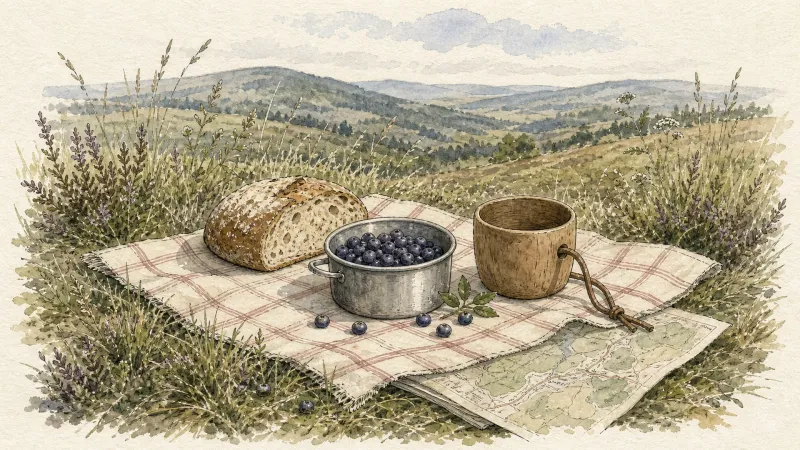
Circuit n°38 Aller/retour à La Chaise Dieu
Discover this trail through the heart of Livradois-Forez.
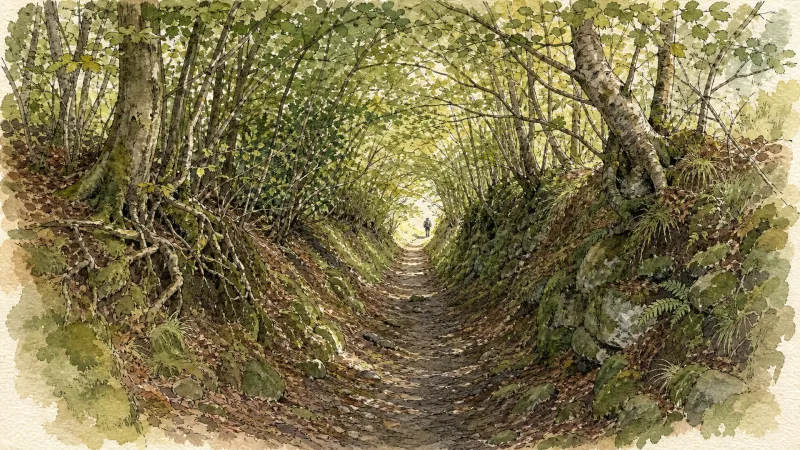
Tour du Haut-Livradois et Abbayes (circuit route n°20)
Discover this trail through the heart of Livradois-Forez.
Explore Nearby
Complement your visit to Malvières by exploring these neighboring villages.
Bonneval
A high-altitude sanctuary where ancient feudal earthworks and vibrant 16th-century murals offer a profound glimpse into the medieval soul of the Velay.
Dore-l'Église
A high-altitude sanctuary where Romanesque architecture meets dark medieval lore, perfect for a contemplative afternoon detour through the southern reaches of the Livradois.
Jullianges
A high-altitude sanctuary on the Velay plateau where 14th-century ecclesiastical stone meets the unique spectacle of France’s loftiest equestrian racing circuit.
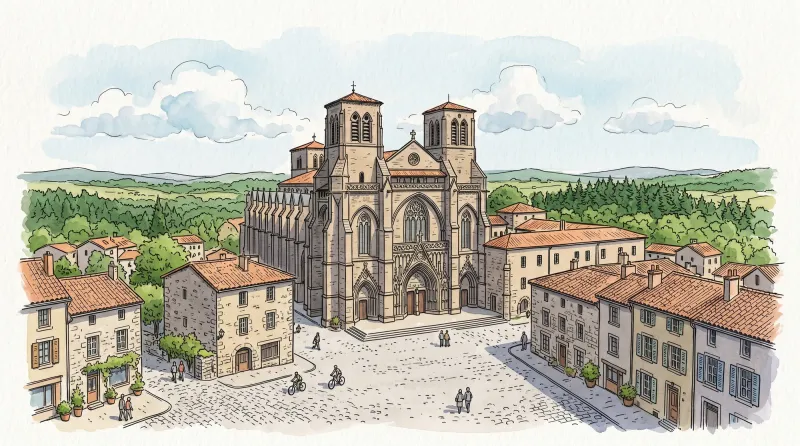
La Chaise-Dieu
An architectural titan of the high granite plateau, featuring a world-renowned Benedictine abbey, haunting Danse Macabre frescoes, and a legacy of papal ambition.
La Chapelle-Geneste
A high-altitude sanctuary defined by sprawling forests, a magnificent curved stone viaduct, and deep ties to the monastic power of La Chaise-Dieu.
Mayres
A high-altitude sanctuary of granite and timber where silent 15th-century masonry meets the deep, arboreal hush of the Forez forests.
Saint-Jean-d'Aubrigoux
A high-altitude sanctuary of Neolithic dolmens and Carolingian remnants where ancient Roman roads meet the dense forests of the Haut-Velay.
Saint-Victor-sur-Arlanc
A high-altitude threshold between the Forez and Livradois, centered on a 12th-century commandery of the Antonine monks.