Illustration in progress
Ascending toward the upper reaches of the Livradois, the landscape hardens into the granite defiance that once earned this settlement the Revolutionary title of Sauveur-le-Rocher. At an altitude peaking near a thousand meters, the air carries a sharp, crystalline quality, even during the height of summer. This is a territory of radical dispersal, where stone dwellings are scattered like debris across a steep, verdant incline. The village core remains a quiet testament to a time when the mountain dictated the terms of survival, its masonry weathered by the biting winds and significant annual rainfall characteristic of the Nord-est du Massif Central.
The architectural centerpiece is not crafted from mortar, but from ancient timber and heartwood. The Tilleul de Sully, a lime tree of staggering proportions, stands as a living chronicle of the late sixteenth century, its gnarled trunk and sprawling canopy having earned it the official designation of a Remarkable Tree. To stand beneath its shadow is to touch a physical link to the reign of Henri IV; the bark is deeply furrowed, a tactile map of centuries spent enduring heavy Auvergne snows. It dominates the small square, providing a somber, majestic counterpoint to the modest, noble lines of the local church.
Beyond the village center, the rhythmic clatter of the AGRIVAP heritage rail breaks the profound silence of the surrounding woodlands. These forests, which blanket sixty percent of the commune, consist of dense stands of spruce and fir that crowd the horizon in every direction. Watching the vintage train steam through this corridor of deep green offers a fleeting glimpse into the industrial heritage of the region. The experience here is one of sensory immersion, where the scent of resinous pine needles mingles with the faint, nostalgic aroma of coal smoke and the cool dampness of the mountain soil.
Local profile
At a Glance
- Population
- 82
- Demonym
- —
- Altitude
- 689–964 m
- Forest
- 60.5%
residents
local residents
lowest to highest
commune coverage
Did You Know?
“During the French Revolution, the commune shed its religious prefix to become "Sauveur-le-Rocher," a name reflecting the rugged granite reality of its terrain.”
Cultural Heritage
Protected historic monuments in Saint-Sauveur-la-Sagne
Eglise Saint-Sauveur
Saint-Sauveur-la-Sagne
Recent Wildlife & Flora Log
Nature observations recorded within 5km of Saint-Sauveur-la-Sagne.
Barcelona-nuts
Yellow-faced Blowfly
Black-Tailed Skimmer
Azure Bluet
Asp Viper
Southern White Admiral
Bloody-Nosed Beetle
Eristalis pertinax (Scopoli, 1763)
Jersey Tiger
Hornet Hoverfly
Trails around Saint-Sauveur-la-Sagne
Discover physical challenges and natural beauty in the immediate vicinity.

Clavelier
This 1.8 km loop starts and finishes at saint-Sauveur-La-Sagne (Clavelier), with 45 m of ascent and an estimated duration of 30 minutes.
Issandolanges
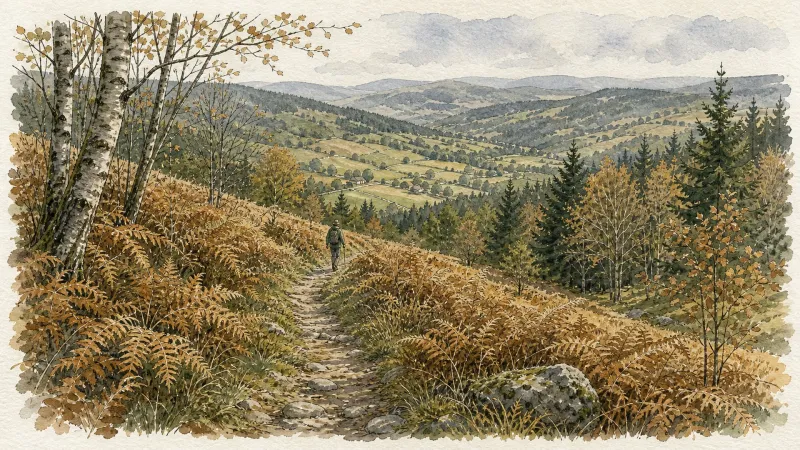
Issandolanges, one of the treasures of the Pays d’Arlanc! Inhabited until the 20th century, this village bears witness to local history and holds many treasures. To reach it, you pass through the Dolore gorges, close to numerous mills.
Sainte-Elidie Chapel
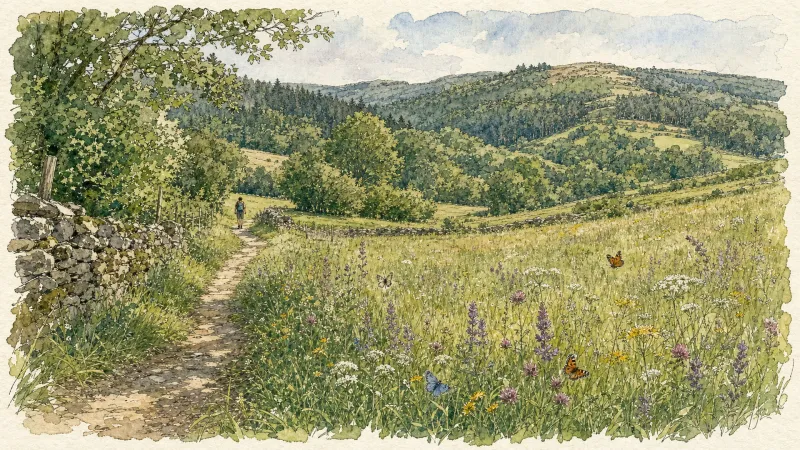
A beautiful route where you can observe how the Haut-Livradois landscape has evolved and contemplate Sainte-Elidie chapel, a place of legends with a magnificent view over the Dore gorges.
Explore Nearby
Complement your visit to Saint-Sauveur-la-Sagne by exploring these neighboring villages.
Mayres
A high-altitude sanctuary of granite and timber where silent 15th-century masonry meets the deep, arboreal hush of the Forez forests.
Novacelles
A deep-valley sanctuary where 14th-century frescoes and the haunting ruins of a ghost village reveal the ancient spiritual core of the Livradois.
Saint-Bonnet-le-Bourg
A high-altitude sanctuary where the Dore river begins its journey amidst ancient Romanesque stonework and deep monastic forests.
Saint-Germain-l'Herm
A high-altitude ridge settlement characterized by ancient megalithic sites, a fortified Romanesque priory, and a storied history of timber craftsmanship for the Royal Navy.
Saint-Just
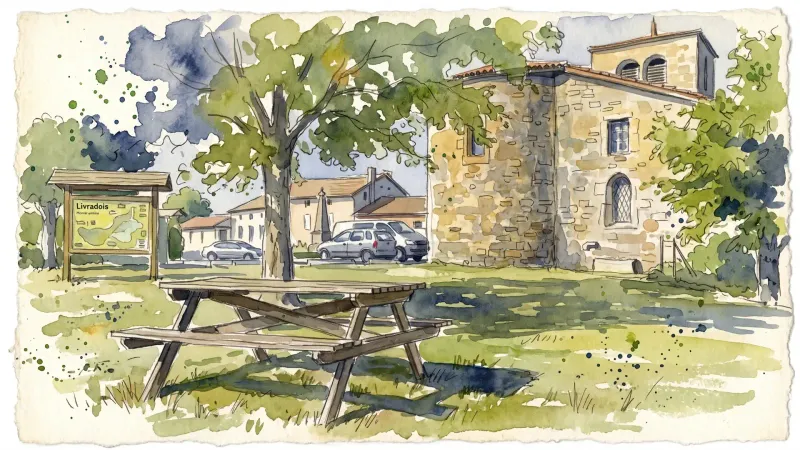
A high-altitude sanctuary of dense pine forests and ancient granite hamlets, perfect for a contemplative afternoon immersion into the rugged soul of the Forez mountains.