Illustration in progress
The name Saint-Éloy-la-Glacière evokes a sharp, crystalline stillness that defines this high-altitude enclave. Reaching elevations of 1,121 meters, the terrain is dominated by a dense, brooding tapestry of forest that claims nearly ninety percent of the landscape. The atmosphere here carries a distinct mountain weight, a sensory reminder of why the revolutionary authorities once stripped the village of its hallowed title, rebranding it simply as Montagne-Glacière to honor the biting frost that clings to these volcanic slopes. Visitors will find the air thin and invigorating, perfect for an afternoon spent observing the way the light filters through massive stands of timber onto the moss-covered granite.
In the center of the small bourg, the Église Saint-Éloy stands as a stoic witness to the passing centuries, its architectural sobriety rooted in the 13th century. This Romanesque structure, constructed from local stone that has weathered centuries of alpine winters, houses a pair of remarkable bronze bells cast in 1488 and 1749. To touch the cold masonry of the church is to connect with a medieval past that survived the iconoclasm of the Enlightenment. The simplicity of its lines reflects a time when beauty was found in durability and the honest labor of the stonemason, offering a stark, noble contrast to the wild, encroaching greenery of the surrounding woods.
Exploration of this territory requires a slow rhythm, moving between the dozen tiny hamlets like Sagne Neyre and Montgheol that are scattered across the peaks. These clusters of dwellings represent a traditional, dispersed way of life that has largely vanished from more accessible regions. Near the village core, the Fountain of Bon-Saint-Éloy remains a site of quiet contemplation, its waters flowing with a consistency that has anchored local legends for generations. For the discerning traveler, a few hours spent navigating these high-altitude paths provides a profound sense of the Livradois-Forez at its most elemental—a place where the silence is only broken by the rustle of the forest and the distant tolling of ancient bronze.
Local profile
At a Glance
- Population
- 63
- Demonym
- —
- Altitude
- 854–1121 m
- Forest
- 88.2%
residents
local residents
lowest to highest
commune coverage
Did You Know?
“During the French Revolution, the commune was stripped of its religious name and officially renamed "Montagne-Glacière" (Ice Mountain) to reflect its notoriously frigid alpine climate.”
Cultural Heritage
Protected historic monuments in Saint-Éloy-la-Glacière
Eglise Saint-Eloy
Saint-Éloy-la-Glacière
Recent Wildlife & Flora Log
Nature observations recorded within 5km of Saint-Éloy-la-Glacière.
Common Gypsyweed
Linaria repens (L.) Mill.
Broad Buckler Fern
Pinesap
Filipendula ulmaria (L.) Maxim.
Common Frog
Black Mullein
Black-widow
Mycelis muralis (L.) Dumort.
Addersmeat
Trails around Saint-Éloy-la-Glacière
Discover physical challenges and natural beauty in the immediate vicinity.
At the sources of Dolore
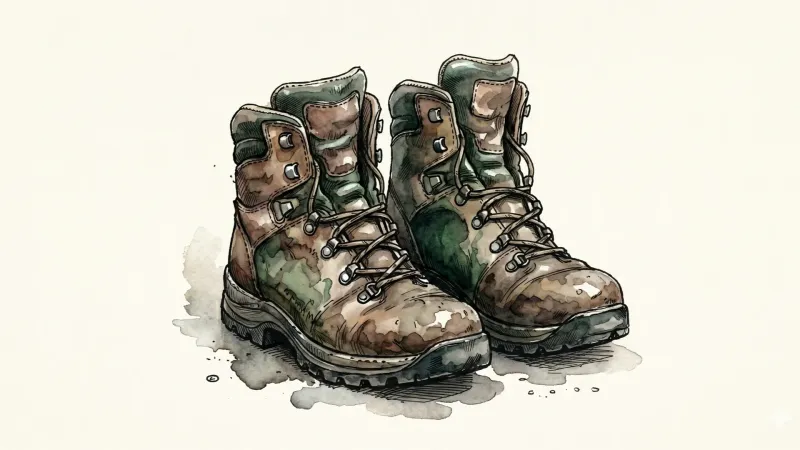
On this path we come across many testimonies of the past: granite crosses, St-Eloy fountain or Rameaux and Rapans crosses. The nature around the Dolore stream is also omnipresent and offers views of the Forez mountains.
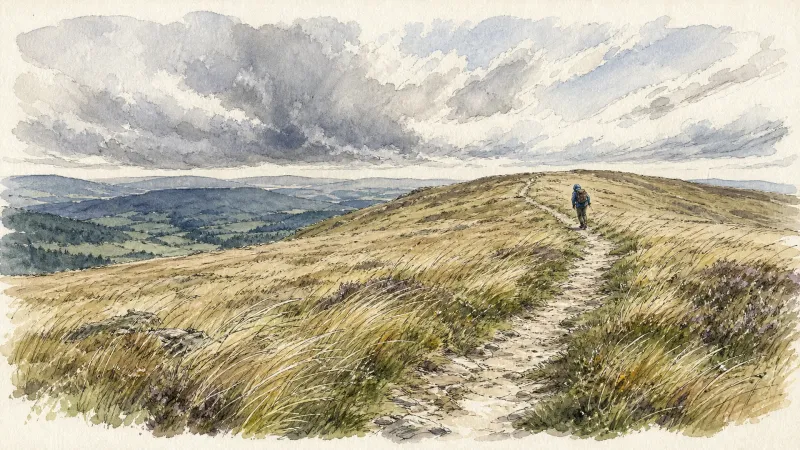
Dore Loop
The Livradois-Forez Regional Natural Park, a land of grassland and woodland, promises a memorable journey between valleys and ridges.
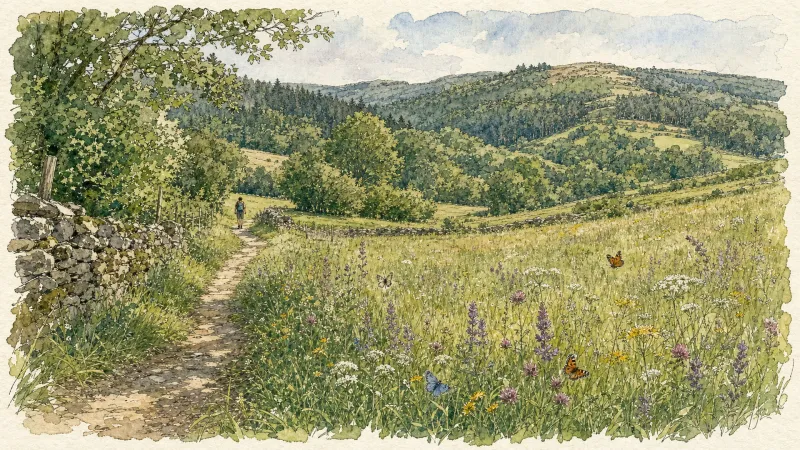
Circuit n°42 La Panoramique
Secteur Échandelys
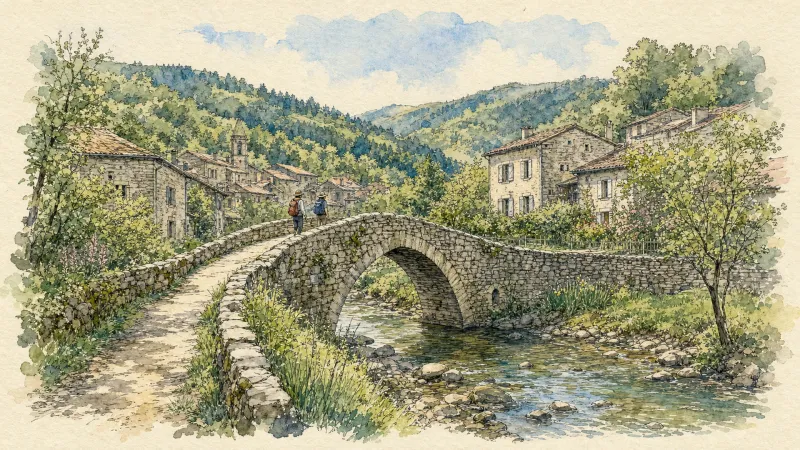
Circuit n°43 Belvédères des Deux Frères
Secteur Échandelys
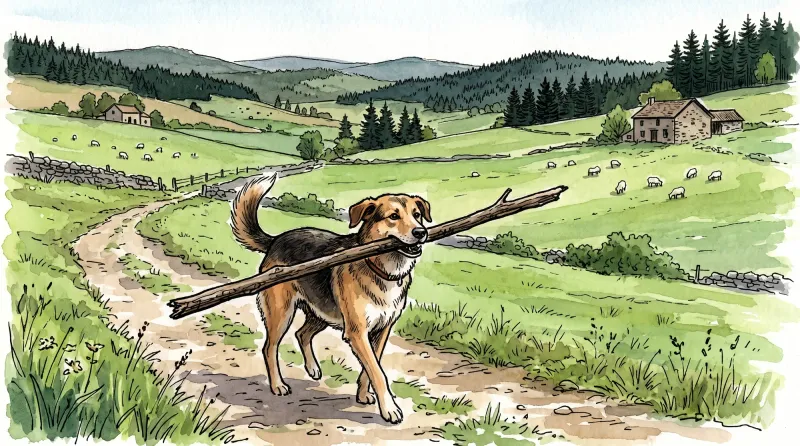
Great Livradois-Forez Mountain-Bike Traverse
In the heart of Auvergne, the Great Livradois-Forez Traverse takes you around the Livradois-Forez Regional Natural Park, between two mountain ranges rising from 400 m to 1,600 m.
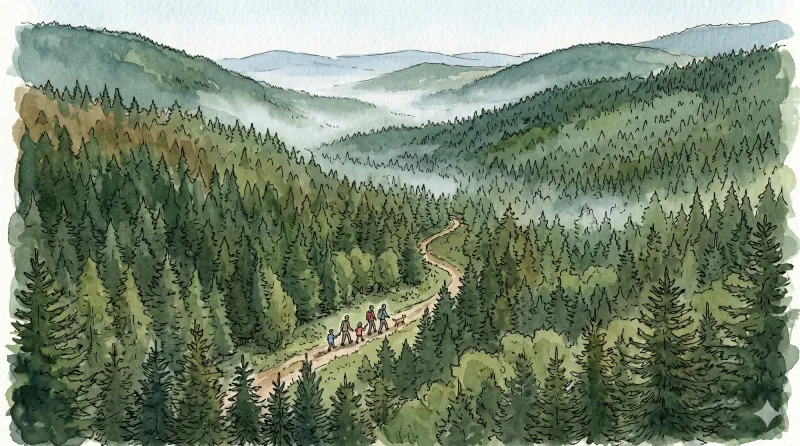
The Panoramas
A lovely short loop with magnificent panoramas of the Sancy volcanoes and the Livradois mountains. Along the way are an ancient Roman road, the Deux Frères viewpoint in the village of Échandelys, a cross and a privately owned château.
Explore Nearby
Complement your visit to Saint-Éloy-la-Glacière by exploring these neighboring villages.
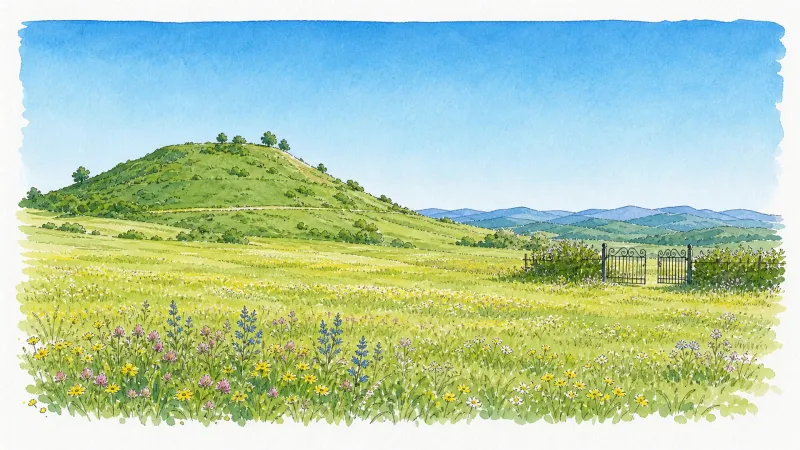
Auzelles
A high-altitude sanctuary of dense woodland and medieval echoes, where the origins of the powerful Montboissier dynasty were forged atop an earthen motte.
Échandelys
A high-altitude sanctuary where the dense conifers of the Bois-Grand meet the aristocratic legacy of the des Roys family, offering a serene afternoon of architectural and sylvan exploration.
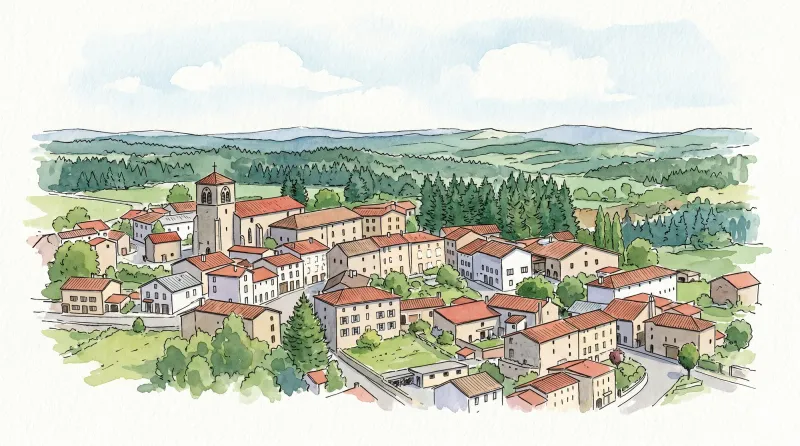
Fournols
A high-altitude sanctuary defined by dense conifer forests, ancient Romanesque granite, and the storied traditions of blue-veined mountain cheese.
Saint-Amant-Roche-Savine
A high-altitude sanctuary of literature and stone where the rugged Livradois landscape meets the refined echoes of 20th-century French prose.