Illustration in progress
The landscape of Bort-l’Étang unfolds as an expansive tapestry of high meadows and fragmented woodlands, where the elevation subtly shifts between the alluvial Dore valley and the rising ridges of the Livradois. Its nomenclature reaches back to antiquity, evoking a “ford of the raven” through the ancient Gaulish roots of boduo and ritu. For those traversing this dispersed territory, one observes a rhythm of life dictated by the soil; over two-thirds of the land remains dedicated to emerald pastures that ripple under the temperate, often cool, Auvergne breeze. The air here carries a specific density, a testament to its location on the fringe of the mountains, where the Atlantic’s influence begins to yield to the more rugged temperament of the Massif Central.
To walk these lanes is to confront the ghosts of a harrowing past, most vividly preserved in the 1740 correspondence of Curé Palhier. His historical accounts depict a community once pushed to the absolute brink of human endurance, surviving on fern roots and beech mast during a winter of profound famine. This weight of memory lends a certain gravity to the stone walls and the quiet hamlets like Basset and Codegnat. There is a palpable sense of resilience in the way the current village has reclaimed its prosperity from such austere beginnings, transforming a site of ancient hardship into a serene agricultural expanse where the only remnants of those lean years are the silent, weathered facades of ancestral barns and the enduring texture of the dark earth.
The architectural silhouette of the commune is anchored by the Church of Saint-Pourçain, a structure that commands attention through its stoic endurance and clean, traditional lines. Nearby, the Château de la Garde offers a glimpse into the defensive past of the region, its masonry reflecting the local geology with a palette of muted earths and greys. These monuments do not shout for attention; rather, they invite a slow contemplation of the transition from medieval fortification to ecclesiastical grace. As the afternoon sun slants across the 15th-century stonework, the interplay of light and shadow reveals the intricate grains of a village that has quietly watched the centuries pass, steadfast and unyielding against the shifting tides of French history.
Local profile
At a Glance
- Population
- 727
- Demonym
- Bortois, Bortoises
- Altitude
- 333–424 m
- Forest
- 17%
residents
local residents
lowest to highest
commune coverage
Did You Know?
“The name 'Bort' originates from the Gaulish words 'boduo' and 'ritu', which translate to the evocative "ford of the raven."”
Cultural Heritage
Protected historic monuments in Bort-l'Étang
Villa de la Gagère
Bort-l'Étang
Eglise Saint-Pourçain
Bort-l'Étang
Château de La Garde
Bort-l'Étang
Recent Wildlife & Flora Log
Nature observations recorded within 5km of Bort-l'Étang.
Bee Fly
Common Wood Pigeon
Butcher's-broom
Flowering-quince
Large Gray Willow
Fig buttercup
Cherry Plum
Suffolk lungwort
Euphorbia × martini Rouy
Peacock
Trails around Bort-l'Étang
Discover physical challenges and natural beauty in the immediate vicinity.

Walk in Bas-Livradois (route route n°25)
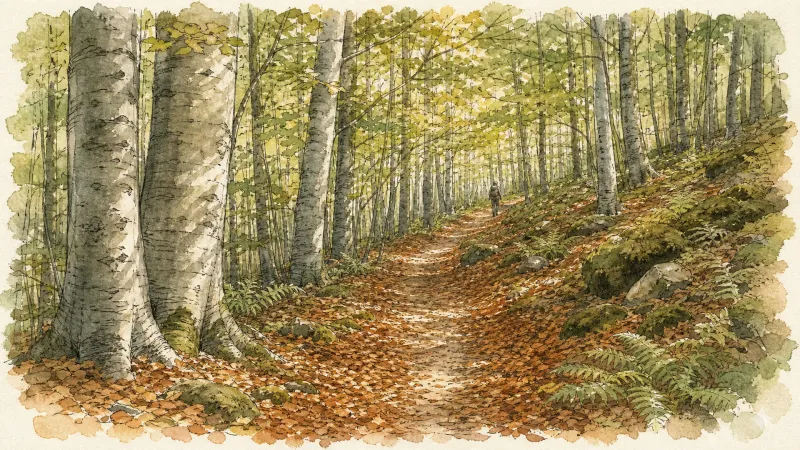
Discover this trail through the heart of Livradois-Forez.
Quatre Vents Challenge (Road Circuit No. 14)
One of the shortest circuits designed as a loop from the national cycle-touring centre, this route uses many quiet minor roads. Follow the directions carefully to avoid losing the route. Take particular care on the road after Néronde, especially when turning left off the D906.
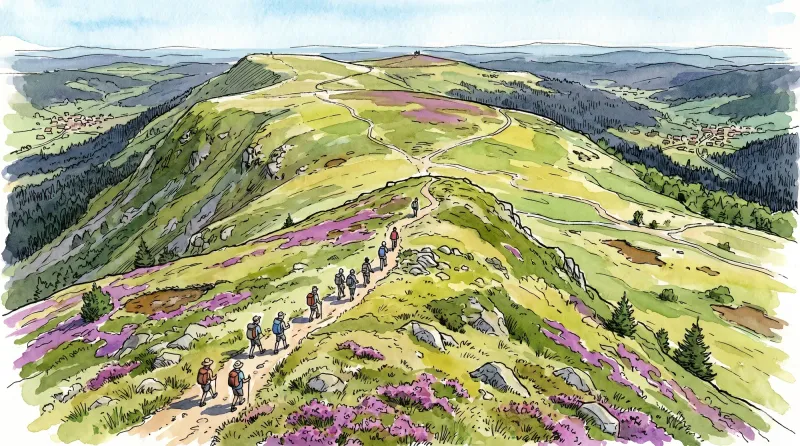
Livradois Circuit — The Châteaux of Livradois (Loop No. 4)
This circuit offers a journey through time, from the Gallo-Roman period to the age of knights.
Découverte de Randan et Maringues (circuit route n°28)
Discover this trail through the heart of Livradois-Forez.
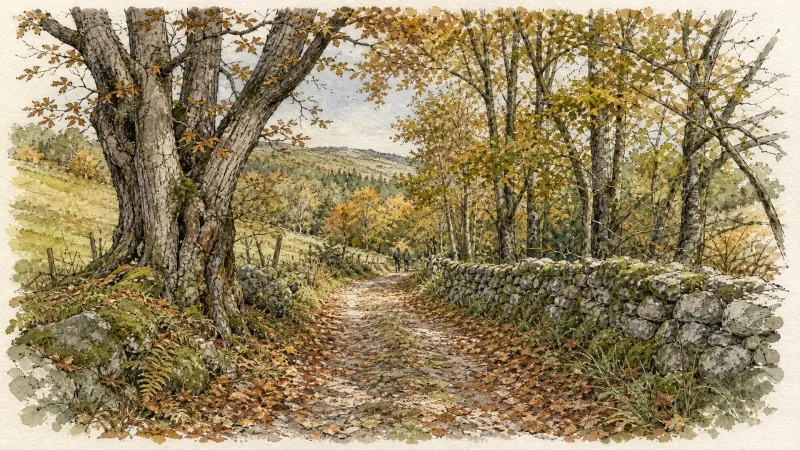
Entre Dore et Allier (circuit route n°1)
Discover this trail through the heart of Livradois-Forez.
Between Towers and Châteaux
A fairly long route, but without major difficulty, across much of the “Entre Dore et Allier” area.
Explore Nearby
Complement your visit to Bort-l'Étang by exploring these neighboring villages.
Glaine-Montaigut
An encounter with Byzantine echoes and feudal legacies, where 12th-century frescoes and the ruins of noble seats punctuate a landscape of high pastures and ancient stone.
Néronde-sur-Dore
A river-bound settlement where the current of the Dore meets medieval devotion at the Église Saint-Bonnet.
Neuville
A pastoral commune where the fourteenth-century towers of Château de Cheix stand guard over rolling prairies and the intellectual legacy of Pierre Teilhard de Chardin.
Peschadoires
A riverfront destination where medieval fortifications meet the industrial echoes of a former inland port on the Dore.
Sermentizon
A refined excursion into the Forez foothills, where the feudal grandeur of the Château d'Aulteribe meets the ancient textures of pisé architecture.