Illustration in progress
Ascending the steep gradients toward the higher reaches of the Livradois-Forez, one encounters Thiolières as a landscape defined by dramatic verticality and dense silvicultural shadows. Reaching altitudes of nearly a thousand meters, the commune is dominated by a dark mantle of forest that covers more than half the territory, where the air grows noticeably sharper and the light filters through ancient canopies of fir and pine. The terrain serves as a silent witness to the rugged resilience of the Auvergne, where the granite foundations of the earth meet a climate shaped by harsh mountain margins, offering the traveler a sense of solitude and elemental scale that is increasingly rare.
The social fabric of this territory is not gathered in a singular, dense cluster but is instead scattered across twenty distinct hamlets and outposts, each a micro-echo of rural history. Names such as Fontbonne, La Visseyre, and Picolagne represent centuries of human adaptation to the steep slopes, where stone dwellings were engineered to withstand the rigorous winters of the Massif Central. Traversing these dispersed settlements reveals a specific architectural stoicism; the buildings are low and sturdy, crafted from local stone and designed to deflect the biting winds that sweep across the high-altitude grazing lands and verdant prairies that make up the remainder of the landscape.
A few hours spent navigating these slopes provides a glimpse into a world governed by the slow, rhythmic cycles of the seasons. The hydrology of the region, marked by substantial annual rainfall, ensures a persistent lushness to the meadows, even as the population has contracted from its late eighteenth-century peak. There is a quiet dignity in the preservation of this open space, where the boundary between the managed field and the wild woodland remains as blurred today as it appeared on the historic Cassini maps. It is a destination for the deliberate observer, where the interest lies in the texture of the lichen on the walls and the shifting mist across the valleys.
Local profile
At a Glance
- Population
- 164
- Demonym
- Thioliérois
- Altitude
- 576–961 m
- Forest
- 52.8%
residents
local residents
lowest to highest
commune coverage
Did You Know?
“At the end of the 18th century, these remote slopes supported a population of over 600 residents, nearly four times the number of inhabitants found there today.”
Cultural Heritage
A quiet village with authentic Auvergne charm.
Recent Wildlife & Flora Log
Nature observations recorded within 5km of Thiolières.
Red-Green Carpet
Early Thorn
Nut-Tree Tussock
Hebrew Character
Bloody-butcher
Liparus coronatus (J.A.E.Goeze, 1777)
House Centipede
Western Green Lacerta
Asp Viper
Common Fire Salamander
Trails around Thiolières
Discover physical challenges and natural beauty in the immediate vicinity.
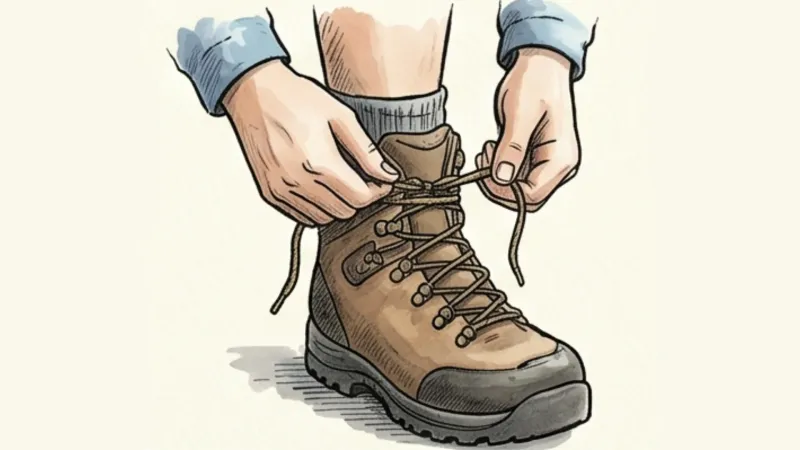
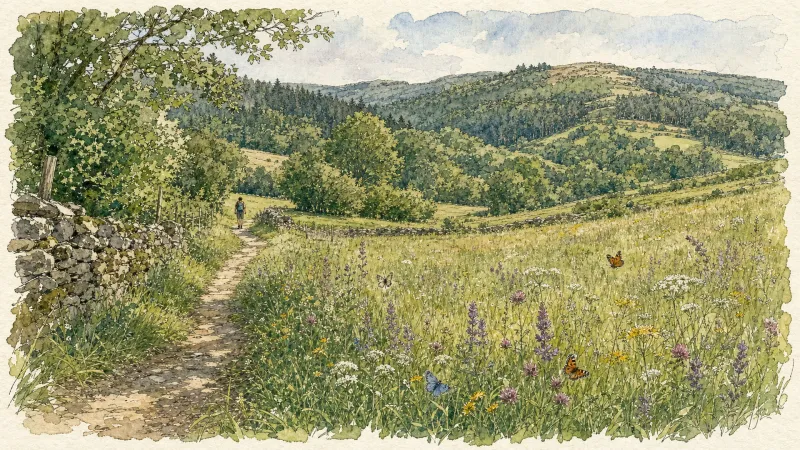
Circuit n°28 De Thiollières à La Forie
Discover this trail through the heart of Livradois-Forez.
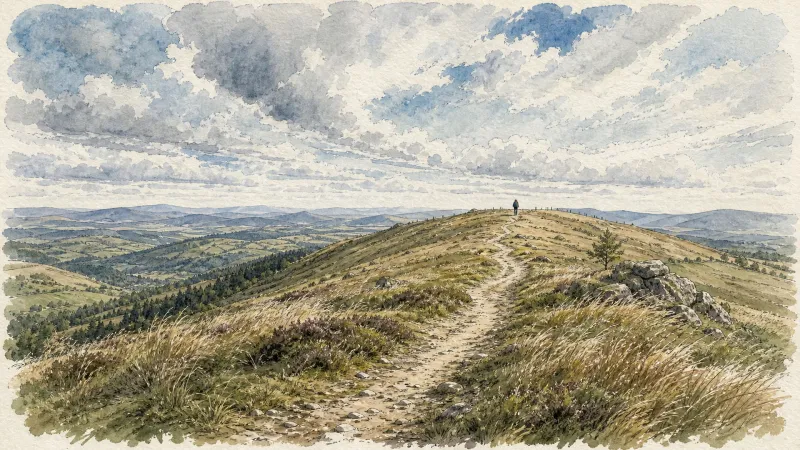
Circuit n°34 Sommet du Livradois
Discover this trail through the heart of Livradois-Forez.
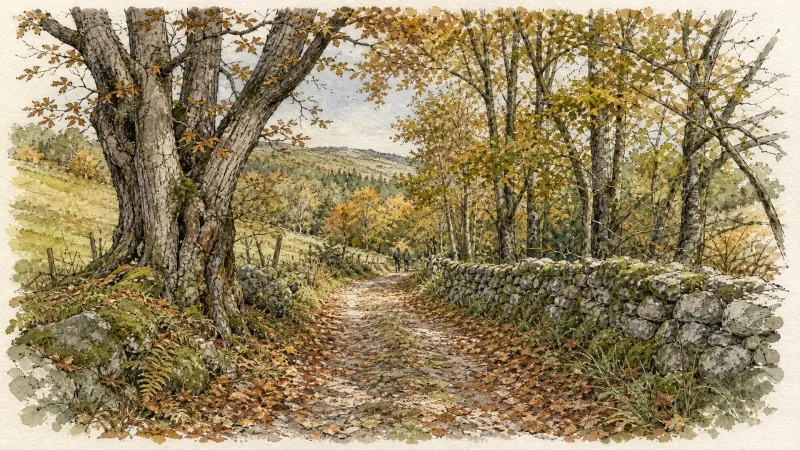
Petit tour à Ambert (circuit route n°3)
Discover this trail through the heart of Livradois-Forez.
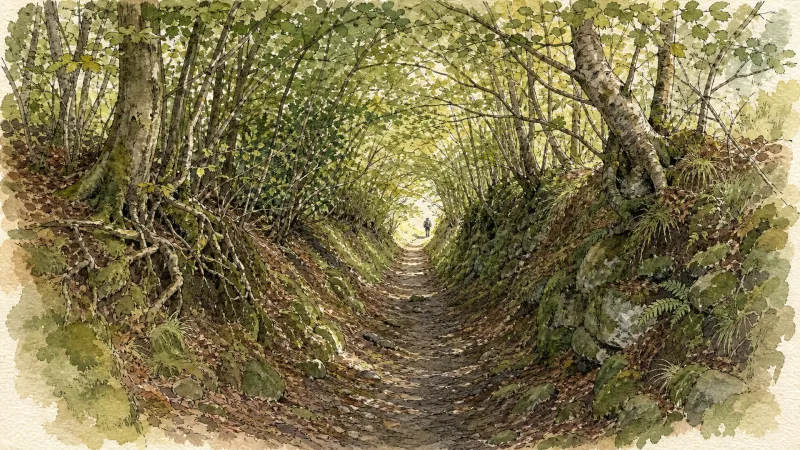
Stone and Rammed Earth
This trail leads you through numerous hamlets along attractive paths, with occasional views across the Forez mountains.
Tour du Haut-Livradois et Abbayes (circuit route n°20)
Discover this trail through the heart of Livradois-Forez.
Explore Nearby
Complement your visit to Thiolières by exploring these neighboring villages.
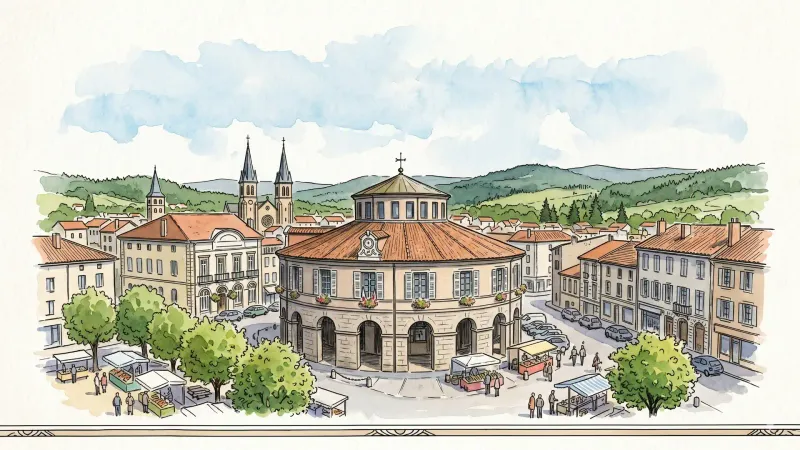
Ambert
A center of medieval commerce and legendary papermaking, where circular architecture meets the rigorous traditions of the Livradois-Forez mountains.
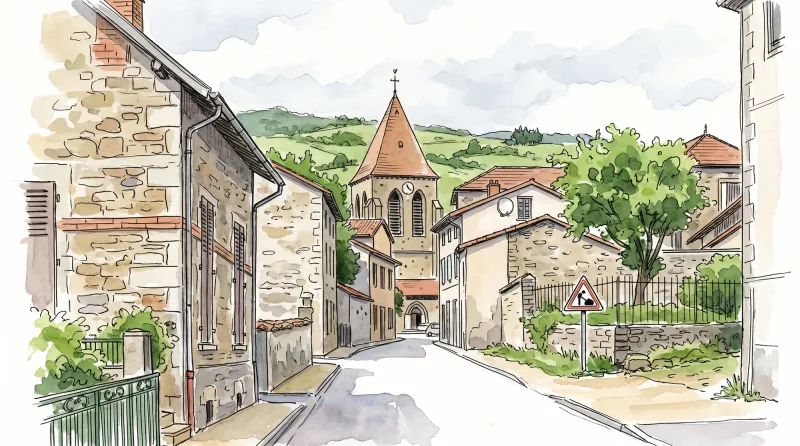
Bertignat
An evocative ascent through the granite-strewn forests of the Livradois, where Gallo-Roman echoes meet the austere beauty of 15th-century stone.
Grandval
A high-altitude sanctuary of dense forests and late-Gothic architecture, offering profound insights into the rural social structures that inspired world-renowned anthropology.
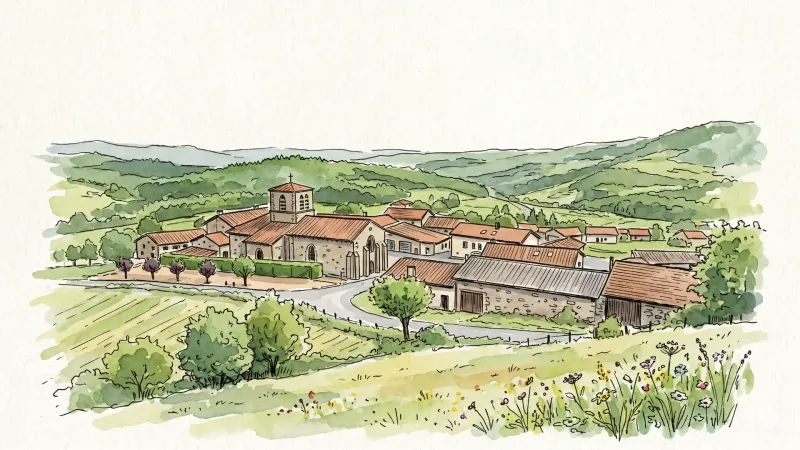
Le Monestier
A high-altitude sanctuary of granite and timber, where the literary ghosts of Henri Pourrat wander through mist-laden forests and 15th-century stone.